
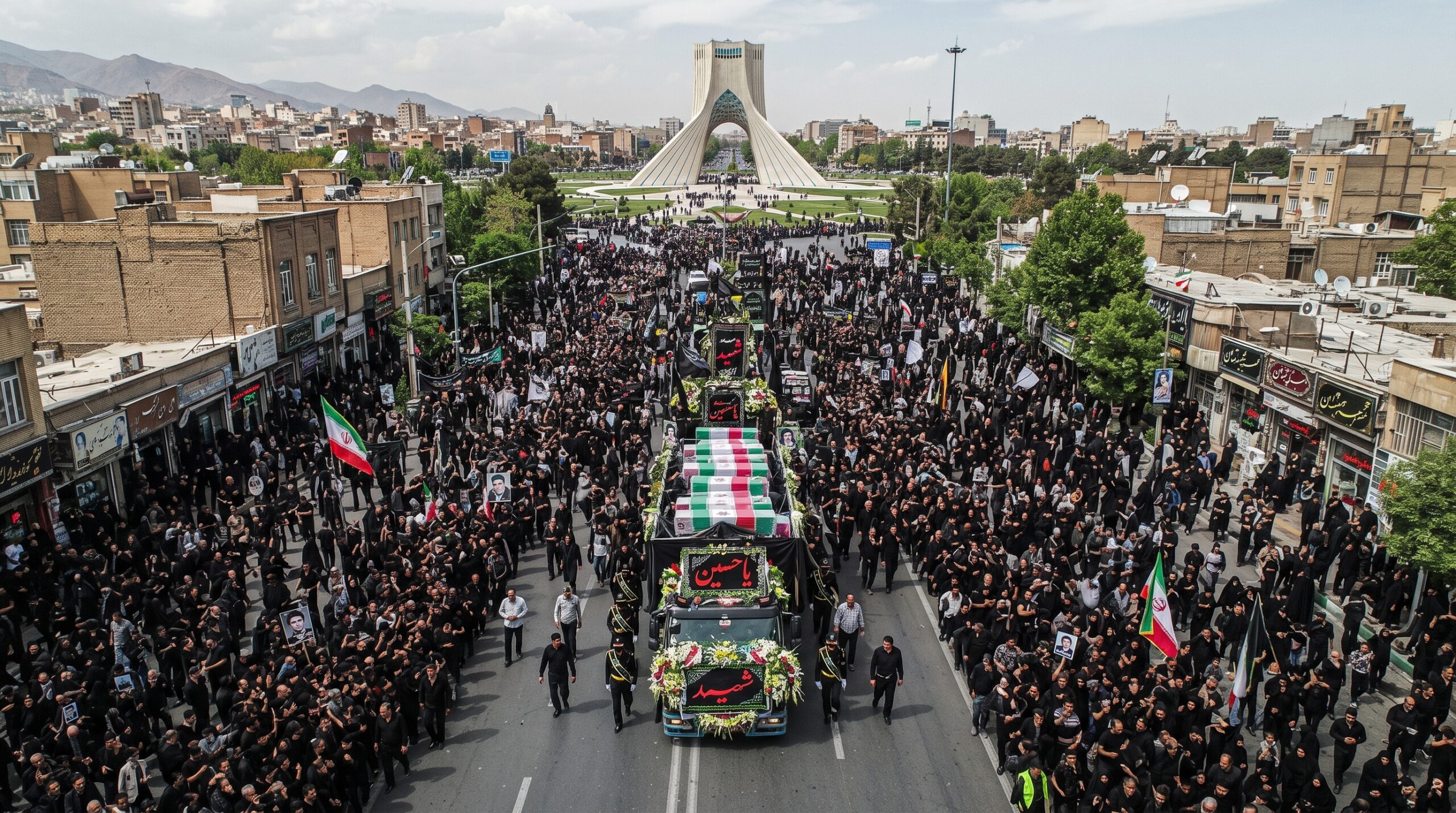
Hundreds of thousands of mourners dressed in black filled the streets of Tehran on Monday for the funeral procession of Supreme Leader Ayatollah Ali Khamenei, who was killed along with family members in an airstrike on February 28 during the opening phase of a war initiated by Israel and the United States.
The procession began at Tehran’s Azadi Square, with crowds extending for several kilometers down the multilane street bearing the same name. Khamenei’s flag-draped coffin, alongside those of his deceased family members, was carried on a truck specially decorated to resemble the ornamental grating found at imam shrines.
Helicopter footage showed the massive gathering appeared to exceed the turnout for Revolutionary Guard General Qassem Soleimani’s 2020 funeral, which drew more than one million attendees. Officials provided no immediate crowd estimates as the procession slowly moved through the capital.
The atmosphere was charged with emotion and calls for retribution. Many mourners carried placards and banners demanding revenge against U.S. President Donald Trump and Israeli Prime Minister Benjamin Netanyahu. Some demonstrators displayed an effigy of Trump being hanged.
“Today that we are here for the funeral for our leader, it’s a very tough day,” said mourner Fatima Hassan. “We are not here to say goodbye to him. We are here for revenge. And we will take revenge.”
Another mourner, Sahar Zaraatgar, expressed similar sentiments: “We are here to show that his path will continue, and every single one of these people will continue down his path with clenched fists, and soon we will certainly avenge his death against the U.S and Israel.”
The procession lasted approximately 12 hours, winding through Tehran’s streets before arriving at Mehrabad International Airport. From there, Khamenei’s casket was transported to Qom, the prominent Shiite seminary city, where ceremonies continued Tuesday. The funeral proceedings, which began Saturday, will conclude Thursday when Khamenei is interred at the Imam Reza shrine in Mashhad, his birthplace. He was 86 years old.
Authorities implemented extensive security measures, closing streets and airspace while suspending normal daily activities. Officials used loudspeakers to urge crowds to move slowly and avoid pushing, while fire truck crews sprayed misted water to cool participants in the summer heat.
The funeral occurs amid stalled negotiations between Iran and the United States regarding the permanent resolution of the ongoing conflict. Key discussion points include the reopening of the Strait of Hormuz, Iran’s nuclear program, and the broader regional tensions involving Israel and Hezbollah in Lebanon. The Strait of Hormuz, a critical passage for global energy supplies, was closed by Iran during the war.
Iran’s new supreme leader, Ayatollah Mojtaba Khamenei, has not appeared at the funeral ceremonies. Reports indicate he may have been wounded in the same airstrike that killed his father and is currently in hiding. Israel has previously targeted Iranian leadership during the conflict and has issued threats against the younger Khamenei.
Federal authorities in the United States have been monitoring Iranian threats against Trump and other administration officials for several years, particularly following Trump’s authorization of the 2020 strike that killed Soleimani.
Leave a Reply