
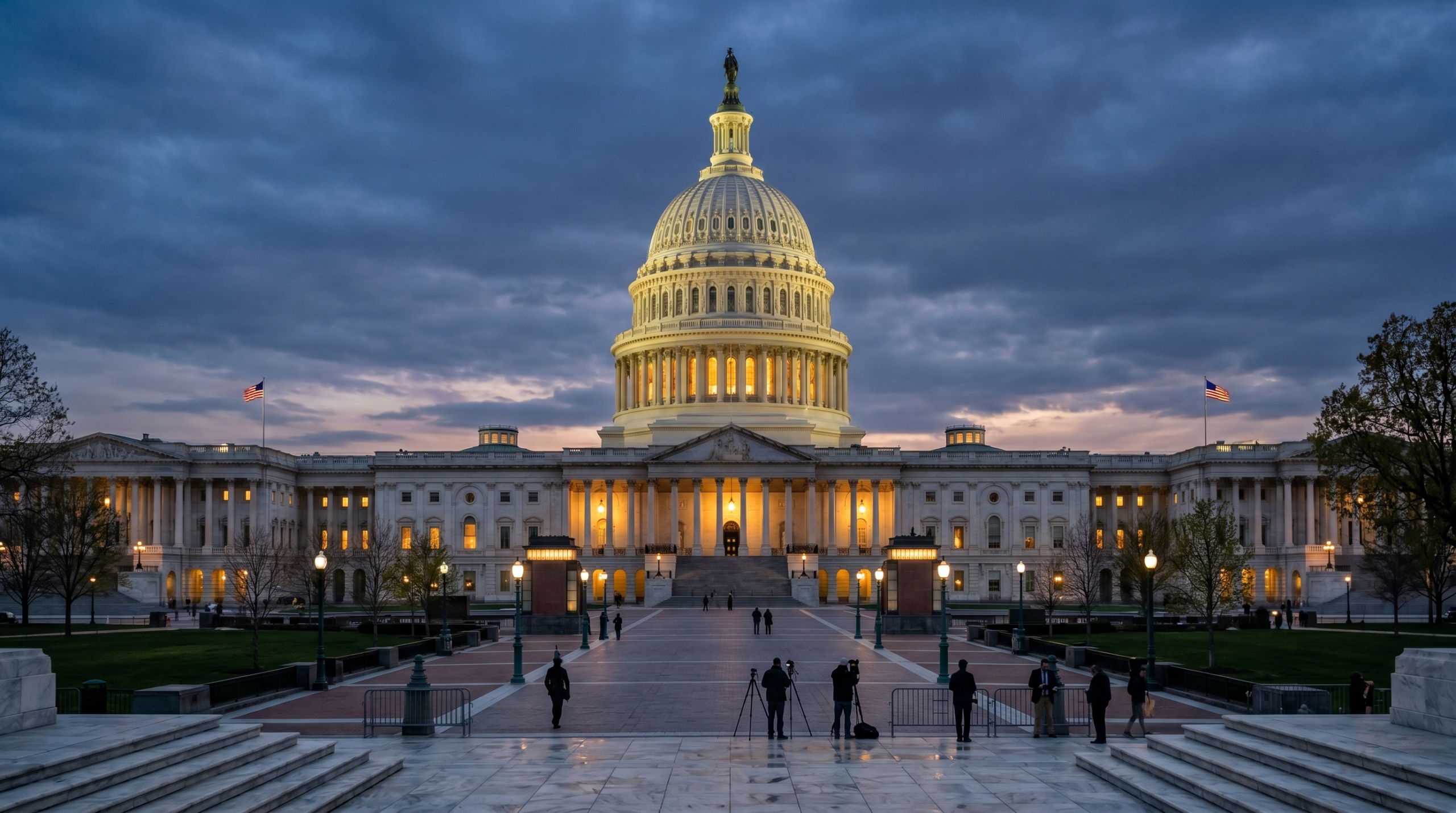
The House of Representatives approved a critical budget reconciliation framework on Wednesday, setting the stage for renewed funding of immigration enforcement agencies following a prolonged shutdown at the Department of Homeland Security. The measure passed with a narrow 215-211 vote, with nearly all Republicans supporting the resolution while Democrats unanimously opposed it.
The reconciliation framework will enable Republican lawmakers to allocate budgets for U.S. Immigration and Customs Enforcement and Border Patrol without requiring Democratic support. While the resolution itself does not directly provide funding, it establishes the fiscal foundation necessary for Congress to draft final reconciliation bills. The proposed plan earmarks approximately $70 billion to fund immigration enforcement programs through the end of President Donald Trump’s second term.
The Department of Homeland Security has been operating under shutdown conditions since late February after Senate Democrats refused to approve the agency’s budget. Their opposition stemmed from concerns over the Trump administration’s immigration enforcement policies, particularly following enforcement actions in Minneapolis. Democrats demanded substantial reforms to ICE and Border Patrol operations before agreeing to any new funding measures.
The shutdown has significantly impacted federal disaster response capabilities and airport security operations. The current reconciliation plan represents part of a two-pronged approach to restore DHS funding, with immigration enforcement spending separated from the main agency budget.
Republican leadership faced considerable internal challenges in securing passage of the measure. Some party members expressed concerns about the size of the proposed reconciliation bill, while others questioned the dual-track funding strategy. The vote was delayed for more than five hours when Republican lawmakers from midwestern states staged a protest over unrelated farm bill legislation.
House Majority Leader Steve Scalise acknowledged the tight margins, noting that such close votes are typical given Republicans’ slim majority in the chamber. He indicated that work on the homeland security budget would continue Thursday morning. Only two Republicans ultimately voted against the measure.
Democratic opposition centered on what they characterized as excessive spending without adequate oversight. Pennsylvania Representative Brendan Boyle, the ranking Democrat on the House Budget Committee, criticized the allocation of $70 billion to immigration enforcement agencies without accompanying reforms or accountability measures.
In a separate but significant vote, the House also approved a controversial three-year extension of government surveillance authorities under Section 702 of the Foreign Intelligence Surveillance Act. The extension passed 235-191 just hours before the program was set to expire. The provision grants the government authority to conduct surveillance on certain individuals abroad.
The surveillance extension faced resistance from lawmakers across party lines who argued that Section 702 authority lacks sufficient warrant requirements and could potentially enable surveillance of American citizens. Maryland Representative Jamie Raskin, the senior Democrat on the House Judiciary Committee, characterized the extension as granting the Trump administration broad surveillance capabilities over Americans.
Supporters of the extension, including Arkansas Representative Rick Crawford, chairman of the House Intelligence Committee, argued that the legislation includes reforms to enhance congressional oversight while maintaining essential national security capabilities.
Both measures now face uncertain paths forward. The budget reconciliation framework must still result in actual appropriations legislation, while the surveillance extension faces a more challenging approval process in the Senate. The White House has urged immediate passage of the Senate’s budget proposals to restore full DHS operations.
Leave a Reply