
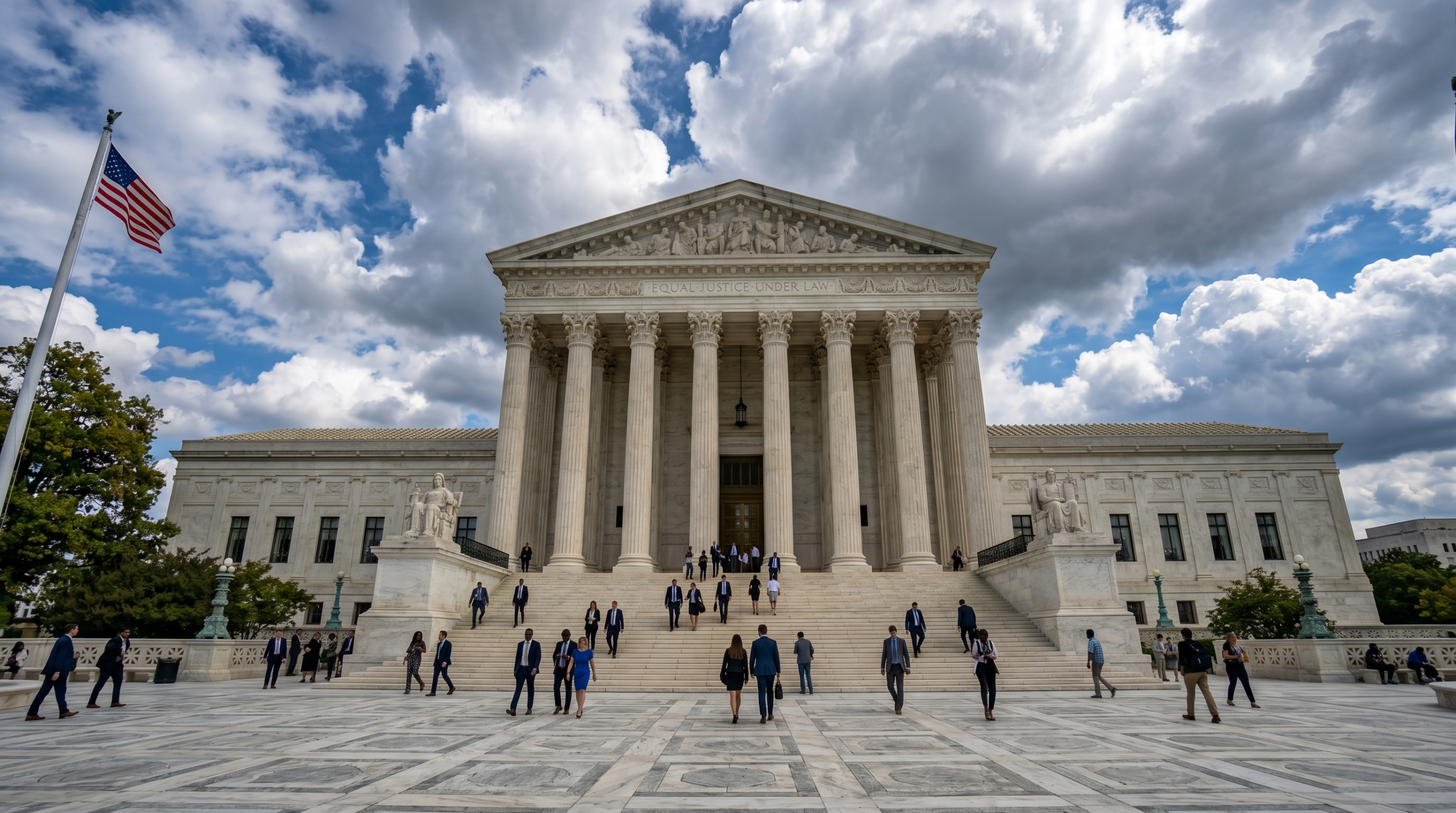
A prominent judicial reform organization has called on the Supreme Court and federal judiciary to implement strict rules preventing judges and court personnel from participating in prediction market platforms, citing concerns about potential insider trading and conflicts of interest.
The push comes in the wake of similar action by the Senate, which recently voted unanimously to prohibit senators and their staff from engaging with prediction markets. The timing also coincides with federal criminal charges against a U.S. Army master sergeant who allegedly profited over $400,000 from insider information about military operations.
Gabe Roth, director of Fix the Court, submitted formal correspondence to Supreme Court officials and the Administrative Office of the U.S. Courts on Friday, arguing that participation in prediction markets would constitute a clear violation of existing judicial conduct codes. These platforms, including services like Polymarket and Kalshi, allow users to place financial wagers on the outcomes of real-world events, including court decisions.
The organization expressed particular concern about recent information leaks from within the judiciary, including the publication of internal Supreme Court deliberations last month. According to Roth, these incidents demonstrate that some individuals within the court system may be willing to exploit their privileged positions for personal gain.
The proposed restrictions would apply to all federal judges, justices, and their staff members, potentially implemented through an addendum to the Supreme Court’s code of conduct or via an ethics advisory opinion for lower federal courts. While acknowledging that such measures cannot completely prevent court insiders from sharing information with external parties, advocates argue that explicit prohibitions represent an essential step in maintaining judicial integrity.
The Senate’s recent action on this issue was spearheaded by Senator Bernie Moreno of Ohio, who emphasized that public servants receiving taxpayer-funded salaries should not engage in speculation on matters they may influence through their official duties. Polymarket responded positively to the legislative action, noting that its terms of service already prohibit participation by government officials.
The concerns about government insider trading gained additional urgency following the indictment of Master Sergeant Gannon Ken Van Dyke on five federal charges. Prosecutors allege that Van Dyke invested approximately $34,000 in prediction market shares anticipating Venezuelan President Nicolás Maduro’s removal from power and a potential U.S. military intervention, ultimately generating profits exceeding $400,000. Van Dyke has entered a not guilty plea to all charges.
The rapid expansion of prediction markets has created unprecedented challenges for government ethics enforcement across all three branches. These platforms have transformed political outcomes, policy decisions, and judicial rulings into opportunities for financial speculation, raising fundamental questions about the intersection of public service and private profit.
While the Administrative Office of the U.S. Courts declined to provide comment on the proposal, and the Supreme Court did not respond to inquiries, the issue highlights growing tensions between emerging financial technologies and traditional government ethics frameworks. The judiciary’s response to these calls for reform could establish important precedents for how public institutions adapt to new forms of financial speculation that directly implicate their decision-making processes.
Leave a Reply