
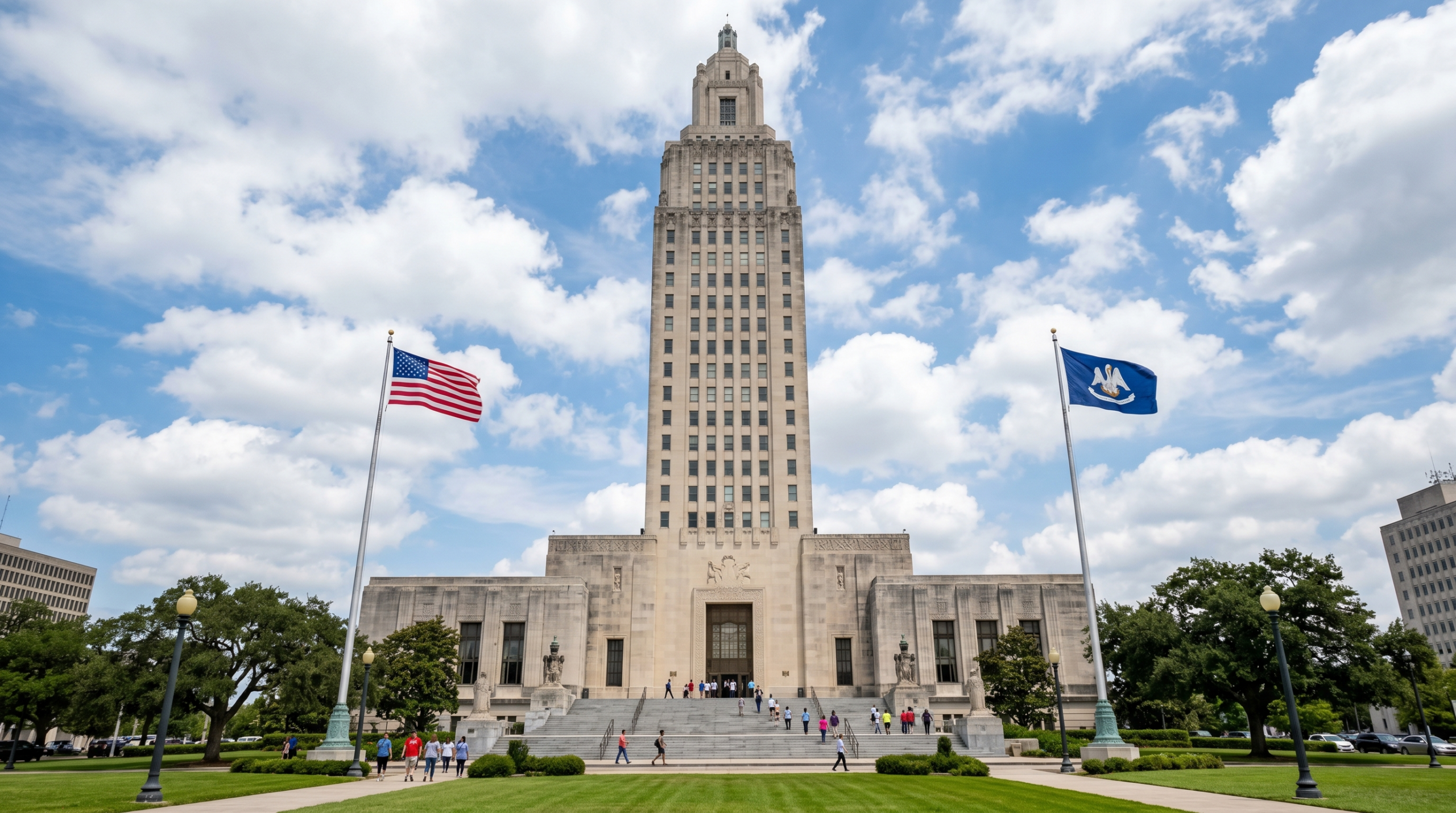
Louisiana’s primary elections for six U.S. House of Representatives seats face unprecedented uncertainty following a Supreme Court ruling that struck down the state’s congressional district map. The elections, originally scheduled for May 16, were suspended by Governor Jeff Landry through an executive order issued Thursday, creating confusion for voters and candidates alike.
The Supreme Court’s 6-3 decision on Wednesday determined that Louisiana’s congressional map unlawfully discriminated based on race when establishing a second majority-Black congressional district. The ruling has triggered immediate legal and electoral consequences, with various parties rushing to the high court seeking different remedies.
A group identifying themselves as non-African American voters petitioned the justices to expedite the release of their certified judgment, which normally takes approximately 32 days to reach the lower court. These petitioners argue that swift action is necessary to allow the state to redraw district boundaries before the 2026 election cycle.
Meanwhile, Black voters who had defended the now-invalidated map strongly opposed any interference with the ongoing electoral process. They emphasized that absentee ballots had already been distributed to voters and early voting was set to commence on Saturday. According to their filing, halting the primary election after ballots have been cast would create electoral chaos and leave both voters and candidates in a state of confusion.
The current controversy stems from litigation that began when Black voters and civil rights organizations challenged Louisiana’s 2022 voting maps. These maps contained only one majority-Black district, despite Black voters comprising 30 percent of the state’s voting-age population. The Supreme Court initially permitted the use of the single majority-Black district map during the 2022 midterm elections, citing the Purcell v. Gonzalez precedent, which prohibits federal court interference in elections when voting is imminent.
Following extensive legal proceedings and a federal court ruling, the Louisiana Legislature created new maps in 2024 that included a second majority-Black district. This prompted the non-African American voter group to file suit, claiming the revised maps violated constitutional principles. The Supreme Court again invoked the Purcell principle to prevent additional changes during the 2024 presidential election, maintaining the map with two majority-Black districts.
The court conducted two oral argument sessions in 2025 to examine whether creating the second majority-Black district under Section 2 of the Voting Rights Act was constitutional. Wednesday’s majority opinion concluded it was not.
Louisiana’s secretary of state has taken the position that the court’s 2024 stay order, which prevented changes during the presidential election, automatically terminated with the announcement of the appeal judgment. State officials interpret Wednesday’s ruling as sufficient authority to begin the redistricting process for the 2026 elections without waiting for formal transmission of the court’s opinion and judgment to lower courts.
The Black voters advocating for maintaining the current election schedule have suggested following precedent from previous cases, where maps later deemed unconstitutional were still used for immediate elections to avoid voter disruption. They argue this approach would prevent electoral confusion while allowing time for proper redistricting.
The Supreme Court may issue a decision on the emergency appeal regarding the certified judgment release at any time, leaving Louisiana’s electoral process in a state of suspension as officials, candidates, and voters await further guidance.
Leave a Reply