
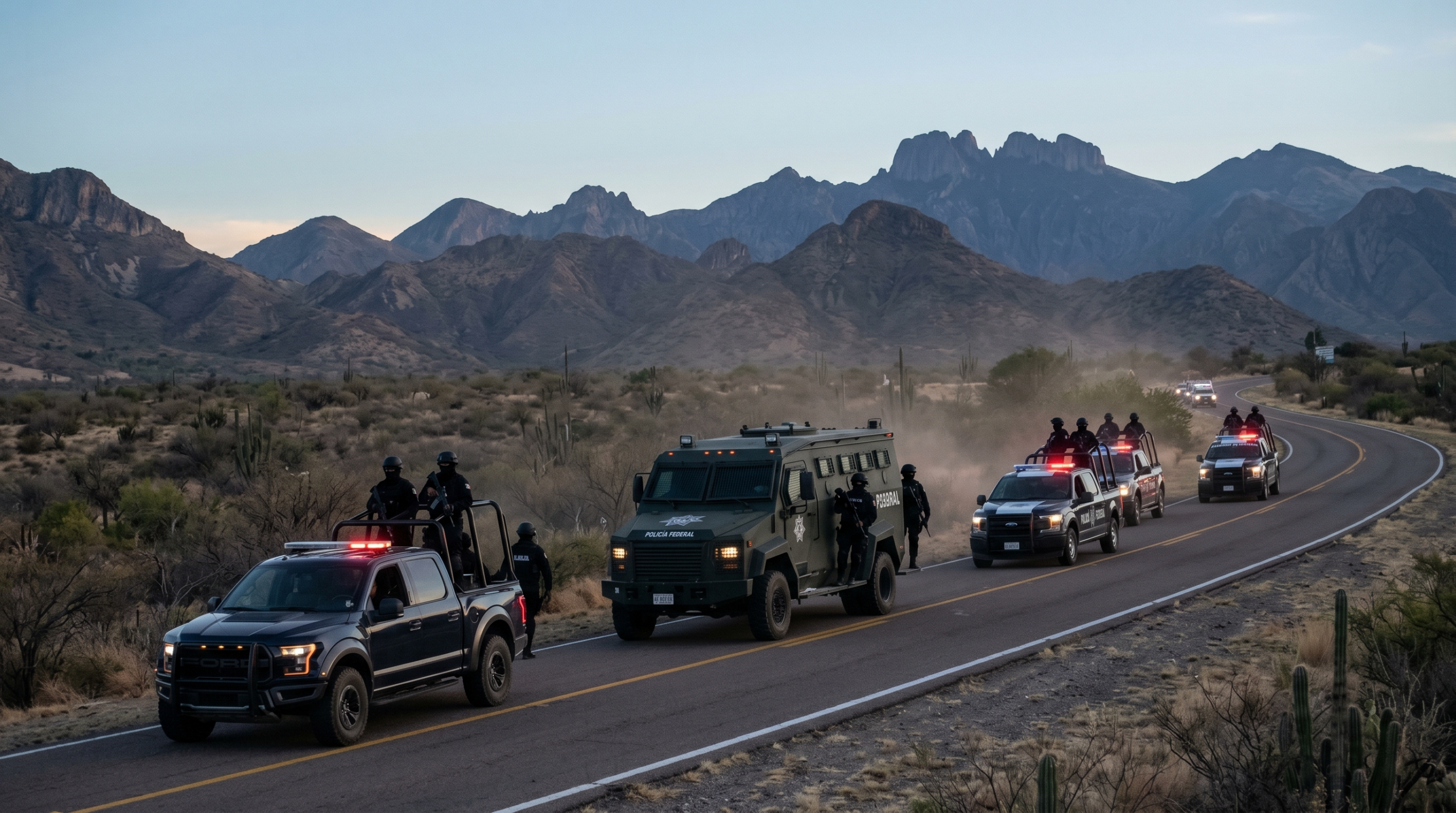
Mexican security forces have arrested Audias Flores Silva, known as “El Jardinero,” a high-ranking commander within the Jalisco Cartel New Generation (CJNG), marking a significant development in ongoing anti-cartel operations. The arrest comes alongside the detention of several other individuals connected to both the CJNG and Gulf Cartel organizations.
The capture represents a notable operational success for Mexican authorities and could potentially destabilize the CJNG’s command structure, which has already been weakened following the death of its founder and leader, known as “El Mencho,” in February. The arrests highlight the continuing pressure on major cartel leadership figures across Mexico, though questions remain about the long-term impact of such operations on drug trafficking networks.
The diminishing roster of high-profile cartel leaders still at large suggests a potential shift in Mexico’s criminal landscape. As authorities continue to arrest or eliminate established crime bosses, the future structure and leadership of major trafficking organizations remains uncertain.
Meanwhile, in Colombia, security forces are confronting renewed violence from dissident factions of the former Revolutionary Armed Forces of Colombia (FARC). At least 26 coordinated attacks struck the departments of Cauca and Valle del Cauca, including a deadly car bombing in the municipality of Cajibío. Authorities have attributed these actions to dissident groups operating under the command of an individual known as Iván Mordisco.
Colombian forces arrested a commander known as “Mi Pez,” who leads the Dagoberto Ramos structure, on Tuesday. Officials have accused him of orchestrating the recent wave of attacks. The coordinated nature and scale of these operations demonstrate that despite sustained military pressure from government forces, dissident factions maintain significant operational capabilities and continue to expand their influence over illicit economies in rural Colombia.
In a separate but related development, United States military forces have significantly increased airstrikes targeting suspected drug-trafficking vessels in Caribbean and Pacific waters over the past two weeks. According to reports citing sources familiar with the operations, at least 185 individuals have been killed since the maritime interdiction campaign began in September 2025.
The acceleration of these strikes coincides with heightened US military engagement with Iran, drawing attention to the parallel nature of these operations. Legal experts have raised concerns about the strikes, characterizing them as extrajudicial killings conducted outside established legal frameworks.
The intensified maritime interdiction efforts appear to be prompting adaptations among trafficking networks. Evidence suggests that drug trafficking organizations are modifying their transportation methods and exploring alternative routes to move cocaine from production centers in Colombia, Bolivia, and Peru to consumer markets in North America and Europe.
These parallel developments across Latin America underscore the evolving nature of drug trafficking operations and law enforcement responses. The arrest of major cartel figures in Mexico, sustained violence from armed groups in Colombia, and increased US military intervention in maritime drug interdiction collectively illustrate the complex and multifaceted challenges facing regional security efforts.
As these operations continue, their effectiveness in disrupting drug trafficking networks remains under scrutiny, with criminal organizations demonstrating consistent abilities to adapt to law enforcement pressure through structural reorganization and tactical modifications.
Leave a Reply