
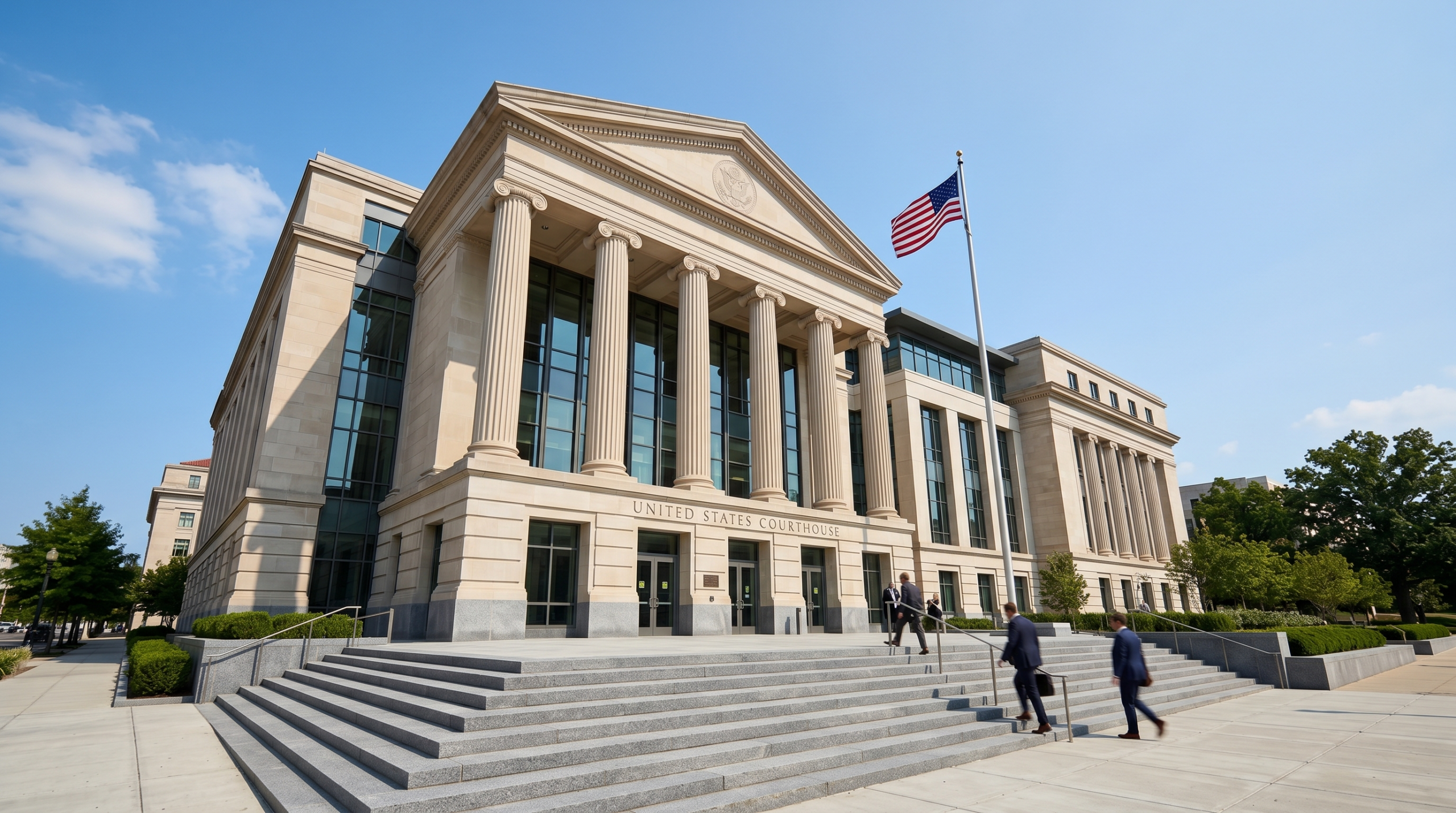
A federal appeals court heard arguments Wednesday regarding whether a Houston judge properly rejected a minority shareholder’s request for ExxonMobil documents intended for use in a French legal proceeding.
The case involves Candel & Partners SAS, a minority investor in ExxonMobil’s former French subsidiary Esso S.A.F., who is pursuing a shareholder derivative lawsuit in France against Esso’s CEO, Charles Amyot. The French litigation alleges suspicious business dealings and financial irregularities that reportedly resulted in losses exceeding one billion euros for minority investors.
Candel initially obtained an ex-parte subpoena from U.S. District Judge Keith P. Ellison in Texas under a federal statute that permits foreign litigants to gather evidence from the United States for use in overseas proceedings. ExxonMobil subsequently filed a motion to quash the subpoena.
Following a hearing, Judge Ellison sided with the oil company, determining that all four discretionary factors established in the Supreme Court’s Intel Corp. v. Advanced Micro Devices, Inc. precedent weighed against granting the document request. The judge characterized the request as excessively broad, intrusive, and burdensome.
During Wednesday’s appellate hearing before a three-judge panel of the Fifth Circuit Court of Appeals, attorney Stephen R. Halpin III, representing Candel, argued that the district court failed to provide sufficient reasoning for its decision. He contended that the judge offered only conclusory statements without meaningful analysis, preventing proper appellate review.
Halpin emphasized that Candel had repeatedly offered to narrow the scope of the subpoena, but these proposals were never considered before the entire request was rejected. He maintained that the district court should have explored these alternatives rather than dismissing the subpoena outright.
Chief U.S. Circuit Judge Jennifer Walker Elrod questioned whether the judge’s statement that the request was too broad and burdensome constituted adequate analysis. Halpin responded that judicial comments during a hearing cannot substitute for a properly reasoned ruling.
U.S. Circuit Judge Irma Ramirez inquired about practical solutions, asking why Candel couldn’t simply issue a new, more focused subpoena. Halpin explained that his client had attempted to negotiate with ExxonMobil, but the company declined to engage in discussions about narrowing the request.
U.S. Circuit Judge James C. Ho expressed skepticism about remanding the case, questioning whether sending it back would merely result in the district court providing more detailed reasoning for the same outcome.
Jason R. LaFond, representing ExxonMobil, defended the district court’s ruling as sufficient and more comprehensive than decisions in comparable cases cited by Candel. He pointed to previous French court decisions that had rejected similar document requests, arguing that the U.S. subpoena represented an improper attempt to circumvent French corporate law protections designed to prevent minority shareholder harassment.
LaFond asserted that French courts had conclusively demonstrated they would reject the evidence being sought through the U.S. proceedings. However, Judge Elrod questioned whether the French rulings actually prohibited the evidence itself or merely rejected the specific procedural method Candel had employed.
The underlying French lawsuit remains active, with discovery requests served on Esso’s CEO, though the French court has not yet issued a ruling. Since the dispute began, ExxonMobil has sold its controlling interest in Esso to North Atlantic France SAS.
The appellate panel took the case under submission after approximately 40 minutes of oral argument. A decision is anticipated in the coming months, which will determine whether the district court’s rejection of the subpoena stands or if the case will be remanded for further consideration.
Leave a Reply