
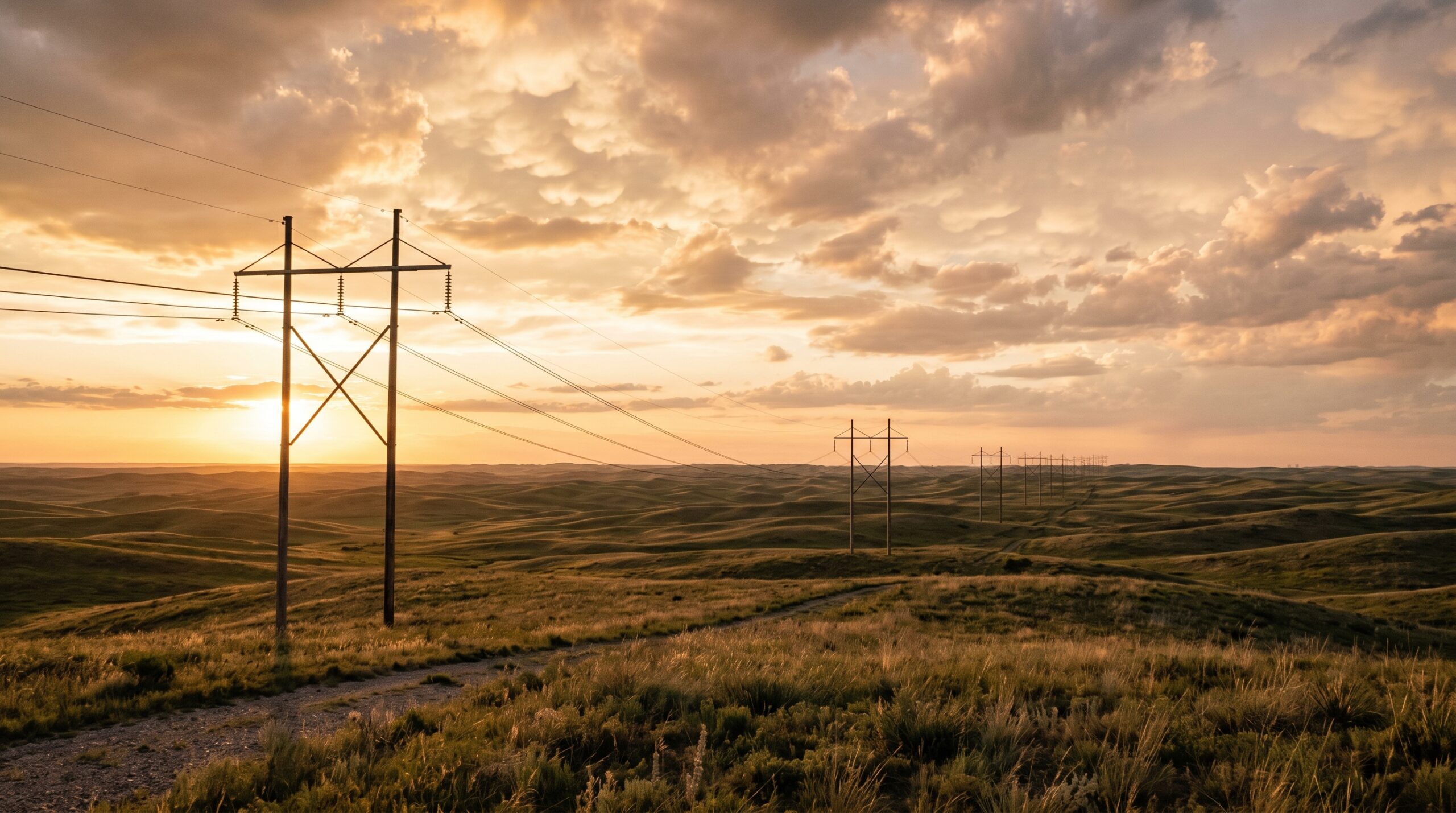
A federal district court has intervened to prevent the U.S. Forest Service from utilizing presidential emergency authority to accelerate the approval process for a major electricity transmission project spanning 226 miles across Nebraska’s Sandhills region.
U.S. District Judge Nina Wang issued a 30-page ruling on Tuesday determining that the Fish and Wildlife Service acted arbitrarily when it attempted to bypass standard environmental and cultural impact assessments for the R-Project, an $835 million infrastructure initiative designed to modernize power delivery in northern Nebraska.
The controversial transmission line project, initially conceived in 2012, would traverse ecologically sensitive areas and historically significant trails. The Nebraska Public Power District, which serves approximately 530,000 customers across 84 of Nebraska’s 93 counties, had secured an incidental take permit from the U.S. Forest Service to address potential impacts on the endangered American burying beetle.
Environmental organizations first challenged the permit in 2019, citing violations of the Endangered Species Act, National Environmental Policy Act, and National Historic Preservation Act. Their efforts resulted in Senior U.S. District Judge William Martinez vacating the original permit in 2020 and ordering the federal agency to reconsider.
The dispute intensified following a January 20, 2025 executive order from President Donald Trump declaring a national energy emergency. The order directed federal agencies to exercise emergency authorities to expedite domestic energy resource development and infrastructure projects. The Nebraska Public Power District subsequently requested that Fish and Wildlife Service invoke these emergency provisions to accelerate the R-Project approval.
A coalition including the Oregon-California Trails Association, the Rosebud Sioux Tribe, local farmers, and environmental groups filed suit on March 3, arguing that construction would irreparably damage the Emigrant Trails network, including the Oregon, California, and Mormon Trails used by 19th-century settlers. The plaintiffs contended that the project would destroy tribal, historic, and cultural landscapes throughout the fragile Sandhills ecosystem.
While Judge Wang acknowledged the validity of the presidential emergency declaration itself, she found that the Fish and Wildlife Service failed to demonstrate that the R-Project qualified as an essential and immediate response to the declared emergency. The judge noted that the agency’s approval letter contained no discussion of whether the project met the necessary regulatory requirements for emergency treatment.
“An agency failing to consider an important aspect of the problem and articulate a satisfactory explanation for its action, as Fish and Wildlife Service did here, is arbitrary or capricious, and a violation of the Administrative Procedure Act,” Wang wrote in her opinion.
The court granted a narrowed injunction specifically preventing the Fish and Wildlife Service from using the executive order to circumvent the National Historic Preservation Act review process already in progress. However, the judge stopped short of blocking the entire project as the environmental groups had requested.
The Nebraska Public Power District, which intervened in the case, estimated that delays could cost the utility more than $100 million. Despite this claim, Judge Wang set the bond requirement for the environmental groups at $5,000, significantly lower than the $100 million requested by Nebraska. The judge explained that requiring a large bond would effectively prevent the petitioners from seeking review of administrative action, particularly given their demonstrated likelihood of success on the merits.
The ruling represents a significant development in the ongoing tension between energy infrastructure development and environmental preservation, particularly regarding the scope of emergency powers in expediting project approvals.
Leave a Reply