
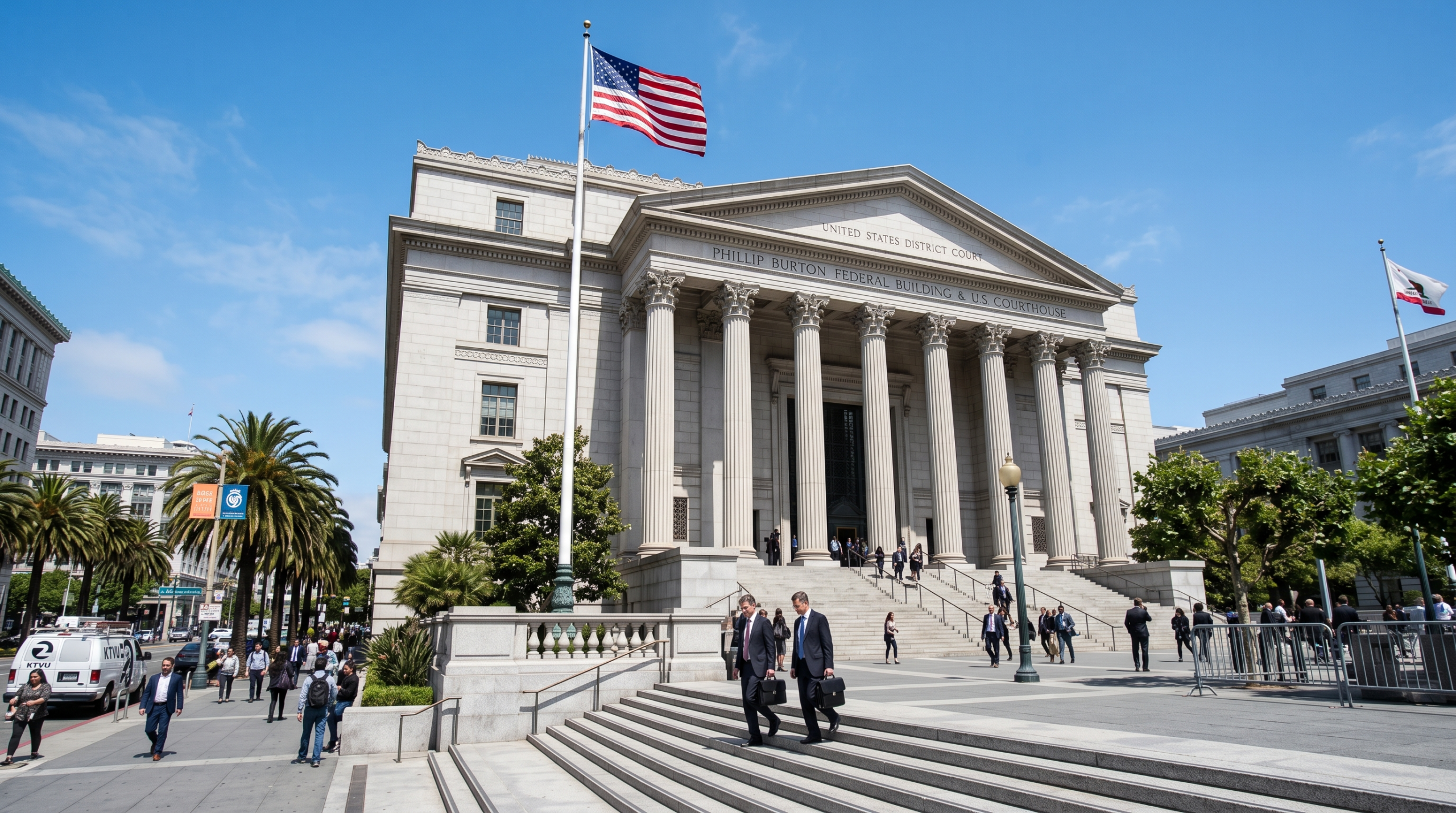
A three-judge panel of the Ninth Circuit Court of Appeals heard arguments Wednesday regarding whether Border Patrol agents in California’s Eastern District are likely to continue detaining individuals without reasonable suspicion of immigration violations.
The case centers on a preliminary injunction issued by a lower court that restricts Border Patrol agents from stopping people without reasonable suspicion they have violated immigration laws. The federal government has appealed this decision, arguing that the United Farmworkers of America failed to demonstrate its members face an increased likelihood of future detention.
Attorney Bree Bernwanger, representing the union, maintained that affected individuals have already suffered harm and remain at risk. She argued that union members who were previously detained continue to use the same roads and visit the same locations as part of their daily routines, creating an ongoing vulnerability to future stops.
“The record is full of it,” Bernwanger stated during oral arguments, emphasizing that plaintiffs have successfully demonstrated they face future risk from Border Patrol agents.
The union’s legal team highlighted that 77 out of 78 arrests during the operation in question occurred when agents had no prior knowledge of the individuals’ immigration status before initiating the stops. Bernwanger characterized this as evidence of a systematic pattern rather than isolated incidents involving rogue agents.
Circuit Judge Morgan Christen, appointed by Barack Obama, questioned whether the alleged violations were limited to a small number of agents acting inappropriately. However, Bernwanger insisted the stops represented a broader pattern of constitutional violations.
Judge Danielle Forrest, a Donald Trump appointee, raised concerns about the lower court’s handling of the case, noting that it had not conducted a formal analysis of the union’s legal standing when issuing the preliminary injunction. “It seems like we’re missing a link,” Forrest observed.
Bernwanger responded that such an analysis was unnecessary because the government had not raised standing as an issue at the time. She maintained that her clients clearly have standing since they were targeted while conducting their regular daily activities.
Michael Velchik, representing the federal government, argued that the plaintiffs lack standing because they cannot demonstrate future injury. He contended that the case involved only a three-day operation and that no basis exists to suggest any plaintiff would be stopped again by agents.
Velchik referenced the 1983 Supreme Court case City of Los Angeles v. Lyons, where the high court ruled that a man who had been choked by a police officer could not demonstrate he faced a threat of being choked again. Judge Christen distinguished the current case, noting that unlike in Lyons, where no policy existed calling for such force, the present situation involved what she described as “a sweep.”
Judge Forrest challenged the government’s position that the plaintiffs face no greater risk of future stops than any other person in the area, pointing out that agents had clearly targeted a specific subset of people.
The preliminary injunction at issue prohibits Border Patrol agents in the Eastern District of California from conducting stops without reasonable suspicion of immigration violations. The government’s appeal seeks to reverse this restriction, while the United Farmworkers of America defends the injunction as necessary to protect its members’ constitutional rights.
The panel, which also includes Circuit Judge Mary Schroeder, appointed by Jimmy Carter, did not issue a decision Wednesday. The case highlights ongoing tensions over immigration enforcement practices and constitutional protections in agricultural communities.
Leave a Reply