
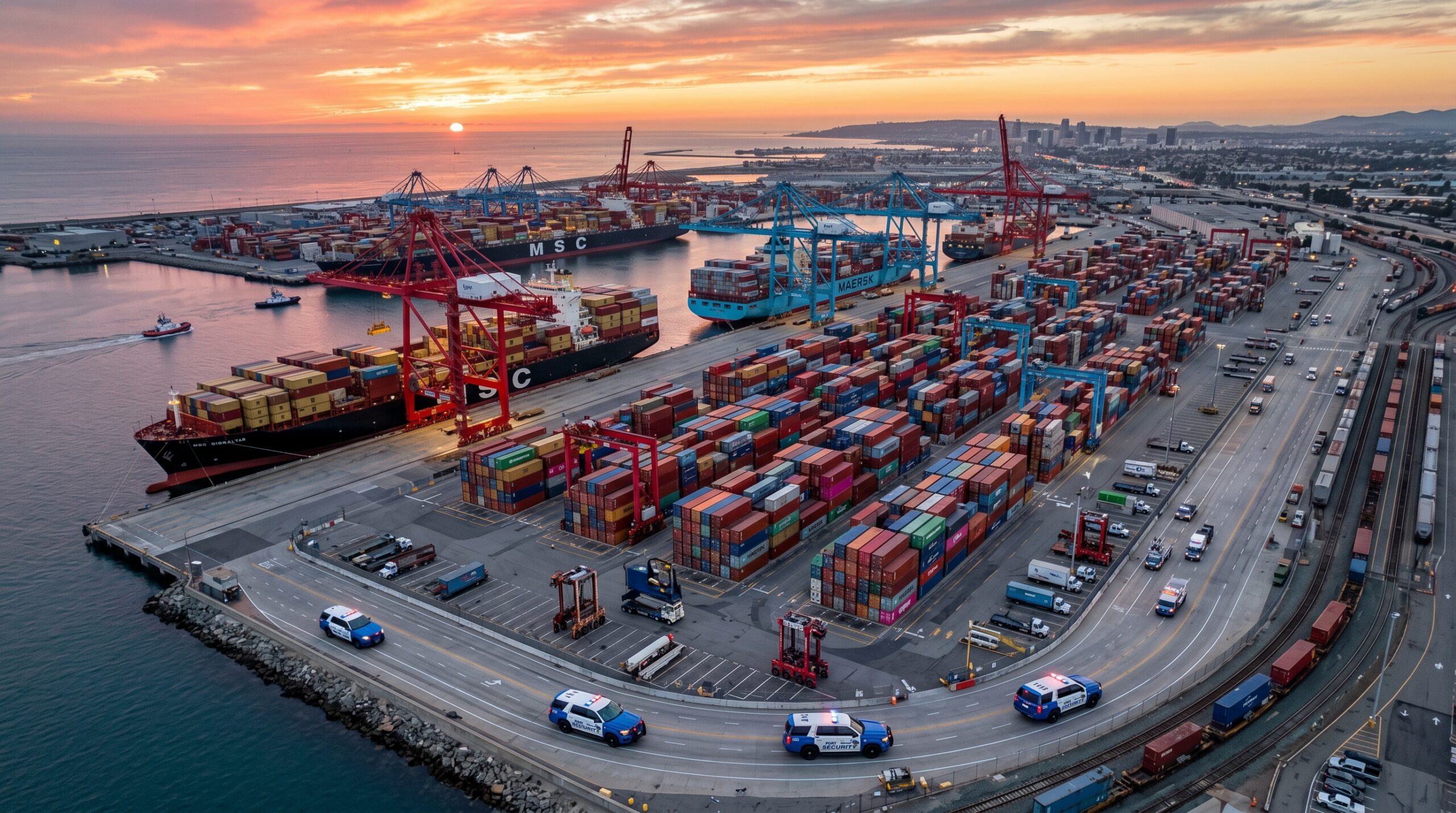
The global cocaine trade underwent significant transformations in 2025, with law enforcement agencies reporting record-breaking seizures across East Asia and Oceania while traditional markets in North America and Europe reached saturation points. Analysis of worldwide seizure data reveals fundamental shifts in trafficking routes, transportation methods, and smuggling techniques that signal a new era for the illicit drug trade.
South Korea experienced its largest cocaine bust in history when authorities intercepted two tons of the substance in April 2025, marking a 300 percent increase in total seizures compared to the previous year. Australia similarly reported substantial growth, with 7.8 tons of cocaine seized throughout 2025, representing a 40 percent rise from 2024 figures.
These dramatic increases in Asia-Pacific regions correlate with significant price disparities across global markets. While wholesale cocaine prices average approximately $20,000 per kilogram in the United States and $30,000 in Europe, the same quantity can command up to $200,000 in Asian markets, creating powerful economic incentives for traffickers to develop new distribution networks.
Transportation methods have evolved considerably in response to enhanced port security measures and improved container scanning technology. Semi-submersible vessels, commonly known as narco-subs, have emerged as an increasingly prevalent smuggling method. Portuguese naval forces discovered 6.5 tons of cocaine aboard a semi-submersible vessel south of the Azores islands in April 2025, marking the largest seizure from such a craft to date. Additionally, authorities discovered at least five narco-subs near the Solomon Islands during 2025, demonstrating both the strategic importance of Oceanian markets and technological advances enabling these vessels to travel greater distances.
Traffickers have also adapted their concealment techniques to circumvent detection systems. In November 2025, Colombian authorities in the port of Buenaventura discovered 14 tons of cocaine mixed with gypsum powder, a sulfate mineral commonly used in construction and agriculture. This represents one of several innovative methods employed to disguise drug shipments from increasingly sophisticated scanning equipment.
Interdiction efforts have proven most effective near South American source countries. Beyond the Buenaventura seizure, Panamanian authorities intercepted 13.5 tons of cocaine from a tugboat that had departed Colombian waters, suggesting that proximity to production centers facilitates more successful enforcement operations.
European demand continues to expand despite market maturation elsewhere. France recorded a 49 percent increase in cocaine seizures, while Belgium experienced 25 percent growth. Portugal also reported record-breaking confiscations. These figures align with European Union Drugs Agency findings showing a 22 percent increase in cocaine residue detected in wastewater samples from multiple European cities. The data indicates Europe has become the world’s largest cocaine market, with European criminal organizations increasingly involved in global trafficking operations.
Looking ahead to 2026, experts anticipate continued growth in Asian seizures as traffickers pursue higher-profit markets. The deployment of remotely controlled and potentially unmanned semi-submersibles may increase, alongside experiments with chemical alterations and liquid conversions designed to evade detection. Recent military strikes against go-fast boats may prompt traffickers to rely more heavily on fishing vessels and semi-submersibles for maritime transportation.
Despite intensified enforcement efforts and evolving interdiction strategies, cocaine production levels remain at historic highs, particularly in Colombia. The resilience of supply chains and the industry’s apparent immunity to conventional market pressures suggest that fundamental disruptions to the global cocaine trade remain unlikely in the immediate future.
Leave a Reply