
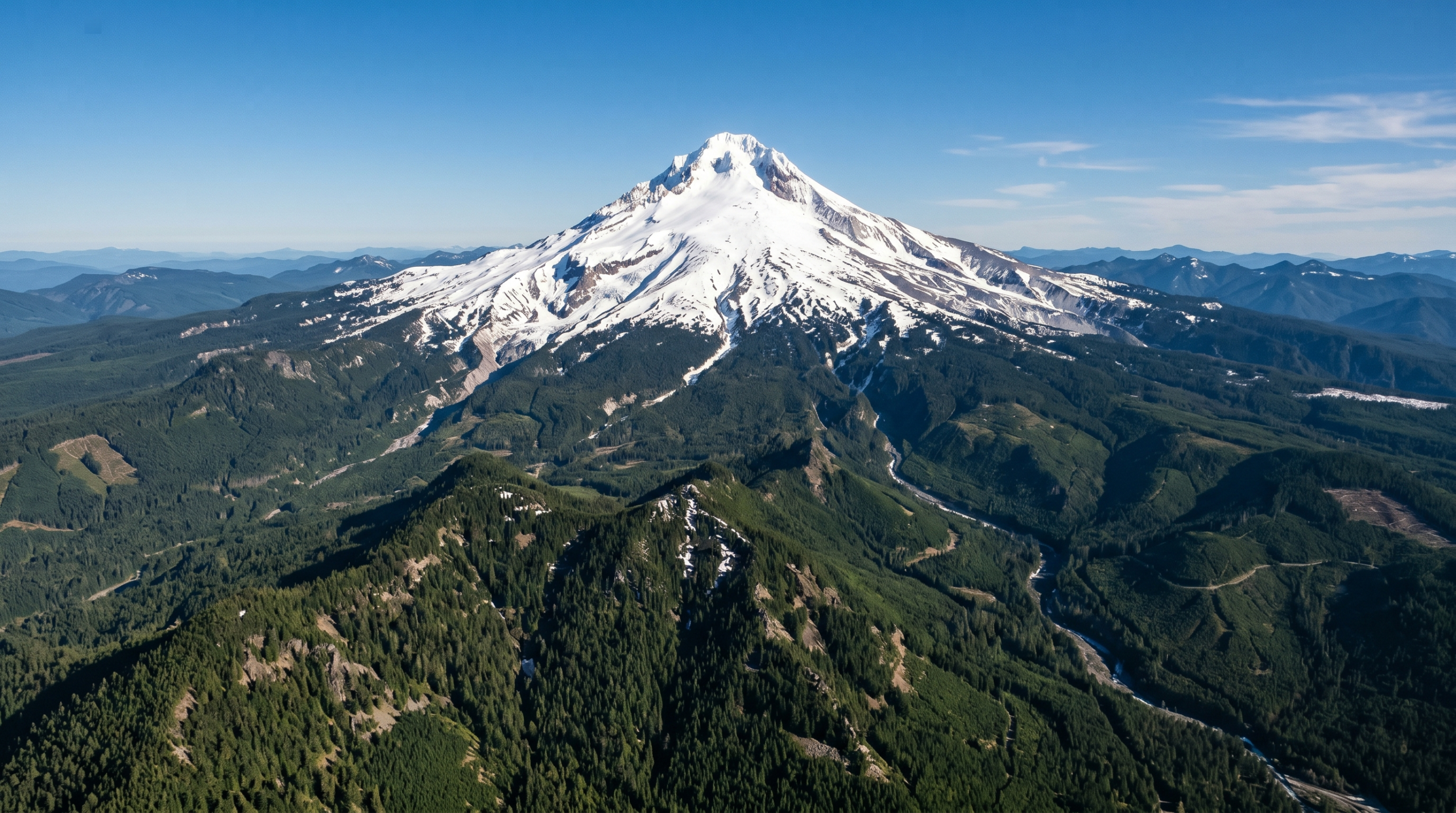
Environmental conservation organizations have initiated legal proceedings in federal court seeking to overturn a 2022 land exchange agreement between the United States Forest Service and Mt. Hood Meadows ski resort in Oregon. The groups argue that the transaction violates federal environmental regulations and congressional protections designed to preserve the undeveloped character of Mount Hood’s northern slopes.
The contested arrangement involves the exchange of 604 acres of private land owned by the ski resort in the Cooper Spur area on Mount Hood’s north side for approximately 67 acres of public land managed by the Forest Service in the Government Camp section. The original proposal had encompassed 763 acres of private land and 107 acres of public land, but the scope was subsequently reduced.
The Sierra Club and Thrive Hood River, among other plaintiff organizations, contend that the land swap directly contradicts provisions established in the Omnibus Public Land Management Act of 2009, which was enacted to prevent development on the mountain’s north side. The groups additionally assert that the transaction fails to comply with the National Environmental Policy Act’s requirements.
During Wednesday’s hearing before U.S. Magistrate Judge Jeff Armistead in the U.S. District Court for Oregon, attorney Jesse Buss, representing the conservation groups, emphasized that the deal had been finalized without adequate public participation or transparency. He argued that the Forest Service had allowed the ski resort to unilaterally reduce the land exchange without proper justification or consideration of alternatives.
“The Forest Service says their hands are tied because their business partner doesn’t want to trade all the land,” Buss stated during the proceedings, questioning the agency’s decision to accommodate the resort’s preferences without public input.
The plaintiffs have requested summary judgment to invalidate the exchange, while the Forest Service and Mt. Hood Meadows have filed a cross-motion for summary judgment defending the transaction. Government attorneys maintain that a 2018 legislative amendment provided flexibility to exchange smaller land parcels when necessary, and that the agreement was not required to involve the maximum acreage initially proposed.
Assistant U.S. Attorney Sean Martin defended the arrangement, explaining that valuation complexities had prevented the full exchange and that the Forest Service could not compel the ski resort to transfer land against its wishes. Both Martin and Steve Odell, representing Mt. Hood Meadows, emphasized the extensive appraisal process undertaken by both parties to reach the current agreement.
The legal dispute centers on interpretations of various legislative provisions and federal environmental policies, with attorneys spending over two hours debating the specific meanings of statutory subsections and the appropriate valuation methods for the mountain parcels involved.
Buss stressed the long-term implications of the land exchange, noting that ownership and control of these parcels would influence the mountain’s future development for potentially centuries. He argued that the Forest Service must provide detailed analysis of different alternatives to satisfy the requirements of the 2009 Omnibus Act and allow public review and response.
The conservation groups initially filed their lawsuit against the Forest Service in 2022. Judge Armistead has the authority to vacate the Forest Service’s decision and require the parties to restart the land exchange process with proper environmental review and public participation. The judge did not indicate when he would issue his ruling on the summary judgment motions.
Mount Hood, located approximately 50 miles east of Portland, serves as a prominent recreational destination in Oregon and hosts multiple ski resorts on its slopes.
Leave a Reply