
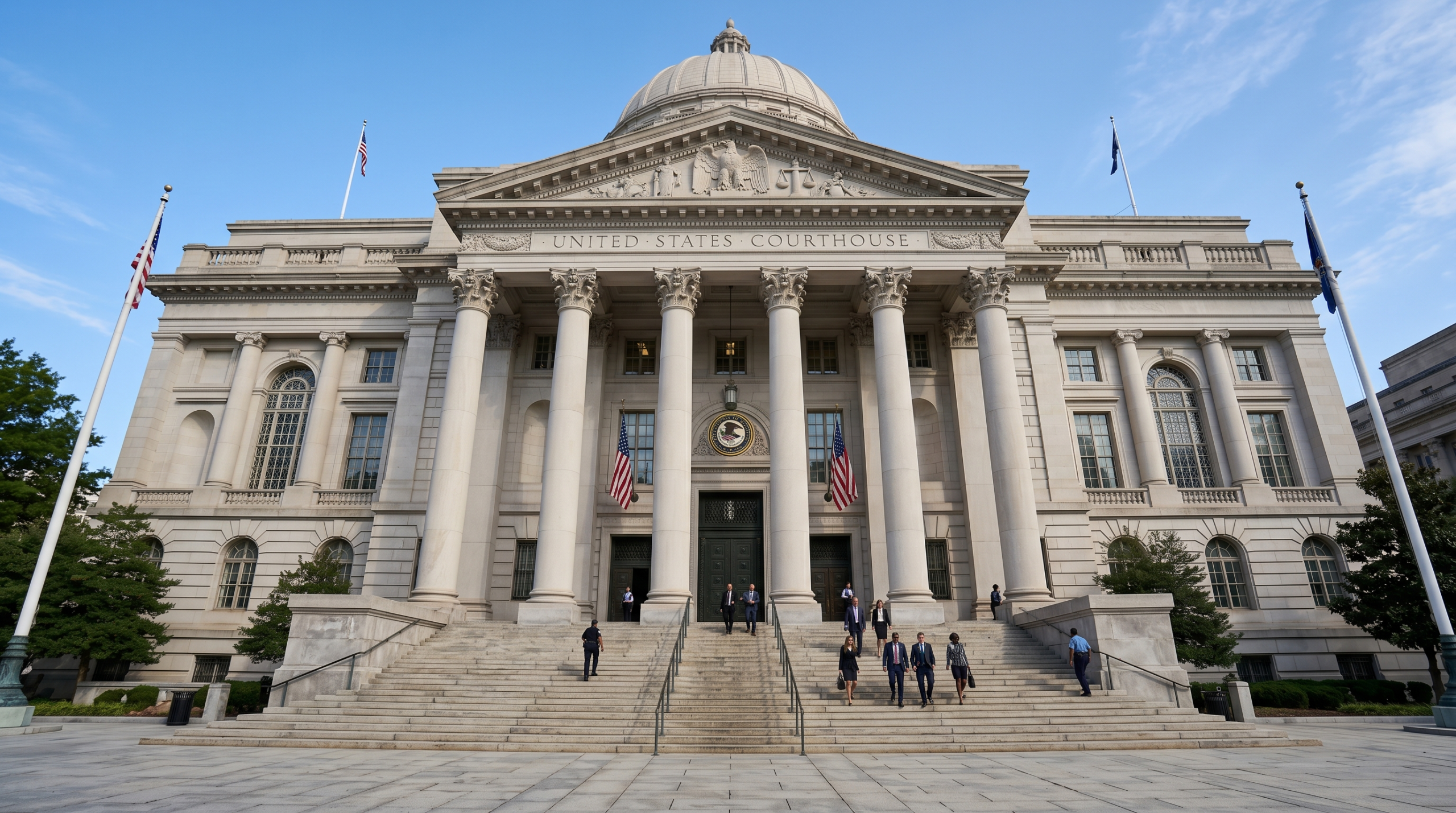
A federal district court in Tennessee has dismissed criminal conspiracy charges against Maryland resident Kilmar Ábrego García, determining that prosecutors pursued the case in retaliation for his successful legal challenge to his deportation.
U.S. District Judge Waverly Crenshaw Jr. ruled on Friday that the government’s prosecution was vindictive, finding that federal authorities only reopened their investigation after courts ordered Ábrego García’s return from El Salvador.
The 32-page decision addressed charges that Ábrego García conspired to transport immigrants between 2016 and 2025 and transported immigrants during a November 30, 2022, traffic stop. The judge concluded that without Ábrego García’s successful lawsuit challenging his removal to El Salvador, prosecutors would not have brought the case.
Ábrego García had been summarily deported to El Salvador on March 15, 2025, despite an immigration judge’s order withholding his removal due to credible fear of persecution. He was sent to the CECOT mega prison facility before mounting his legal challenge.
His attorneys filed suit on March 24 in Maryland, arguing that immigration authorities wrongfully ignored the judicial order protecting him from deportation to El Salvador. Throughout the proceedings, Ábrego García maintained he could be safely removed to Costa Rica, which had agreed not to transfer him to another country. However, government officials instead pursued removal to Uganda, Ghana, Eswatini, and Liberia.
On April 4, U.S. District Judge Paula Xinis ordered the government to facilitate Ábrego García’s return, a decision the Supreme Court subsequently affirmed. The Justice Department initially claimed it lacked authority to return him from Salvadoran custody.
The timeline of events proved crucial to Judge Crenshaw’s decision. The Department of Homeland Security reopened its investigation on April 17, examining a 2022 traffic stop where Ábrego García was found with several immigrants in his vehicle but faced no charges at the time. A Tennessee grand jury indicted him on May 21, and he returned to the United States on June 6.
Judge Crenshaw highlighted statements from acting Attorney General Todd Blanche, who revealed in a television interview that the government began investigating Ábrego García only after the Maryland court ordered his return. The judge noted that Blanche’s comments directly confirmed the executive branch reopened the criminal investigation because the judicial branch required them to facilitate Ábrego García’s return from El Salvador.
Internal Justice Department communications revealed Associate Deputy Attorney General Akash Singh’s involvement in driving the investigation forward. In messages to frontline prosecutors, Singh referred to the case as a top priority, asking about the timeline for bringing charges.
The court found that while there was insufficient evidence of actual vindictiveness, the government failed to rebut the presumption of vindictive prosecution. Judge Crenshaw noted that evidence the government claimed was newly discovered could have been obtained with due diligence long before April 2025.
The ruling emphasized the government’s contradictory positions – initially seeking to remove Ábrego García without prosecution, then shifting to prosecute him while abandoning removal efforts.
The Justice Department has announced plans to appeal the decision, with a spokesperson criticizing the ruling as placing politics above public safety concerns.
Leave a Reply