
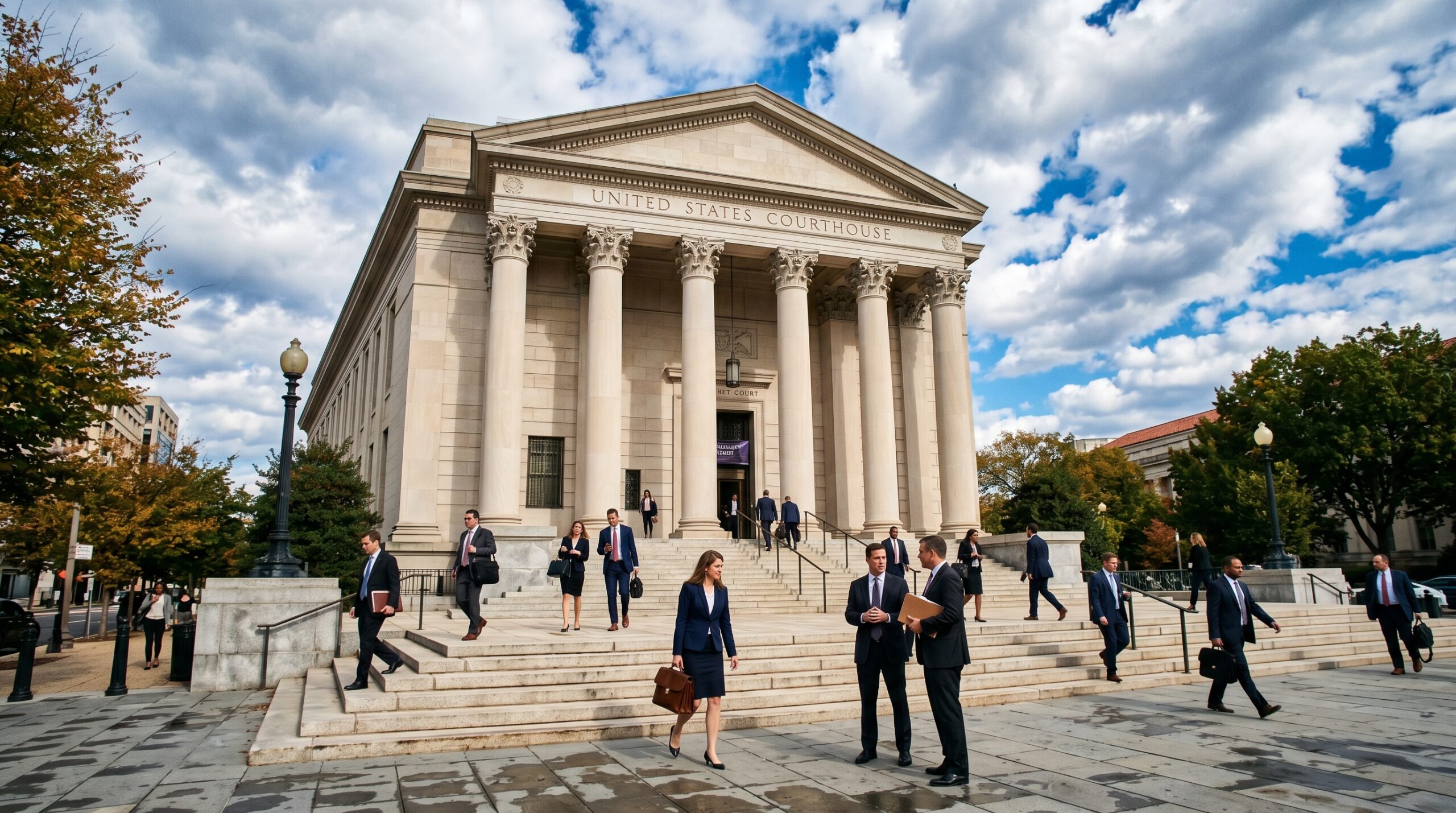
A major technology corporation has filed a comprehensive appeal with the D.C. Circuit Court, challenging a federal judge’s determination that the company maintained an illegal monopoly over the internet search market. The 111-page appeal brief contests U.S. District Judge Amit Mehta’s August 2024 ruling and the subsequent remedies imposed to increase market competition.
The company argues that Judge Mehta’s decision represents a fundamental misinterpretation of antitrust law, asserting that the ruling improperly penalizes business success rather than genuinely anti-competitive behavior. According to the filing, the company had already achieved an 80 percent share of U.S. search queries by 2009, well before any of the challenged conduct occurred.
At the heart of the dispute are agreements the company made with browser developers, including Safari and Mozilla, to serve as their default search engine. Judge Mehta’s original ruling found that these arrangements, involving billions of dollars in payments, constituted illegal monopolistic behavior. The judge also determined that the company had unlawfully tied its browser and app store to agreements with device manufacturers to increase search traffic and data collection.
In its appeal, the corporation maintains that these arrangements were not exclusive deals and that browser companies retained the ability to promote competing search engines. The company emphasizes that these partners chose its search engine based on quality comparisons with competitors, particularly after determining that alternative options were inferior.
While Judge Mehta rejected more severe remedies proposed by the Justice Department in September 2024, including forced divestiture of the company’s browser and mobile operating system divisions, he did mandate significant data-sharing requirements. These remedies require the company to share its search index, user interaction data, and certain advertising syndication services with competitors to help them improve their search capabilities.
The technology giant has criticized these remedies as creating artificial competition that would not naturally emerge in the marketplace. The company expressed particular concern about the requirement to share data with generative artificial intelligence companies, arguing that these entities did not exist when the alleged monopolistic conduct occurred and have already achieved substantial success without assistance.
A contentious aspect of the ongoing proceedings involves the company’s access to information submitted by competitors to a five-member Technical Committee overseeing the implementation of court-ordered remedies. The corporation argues that limiting its participation in this process would constitute a denial of due process, given the potential impact on its business operations.
The appeal draws parallels to the landmark Microsoft antitrust case, where initial proposals for breaking up the company ultimately resulted in a settlement rather than structural remedies. The technology company argues that precedent from that case established important boundaries to prevent antitrust law from being used to punish legitimate competitive success.
Central to the company’s legal argument is the distinction between conduct that harms individual competitors versus conduct that damages the competitive process itself. Under Section 2 of the Sherman Act, the company contends, only the latter constitutes illegal monopolistic behavior. The corporation maintains that its business practices, while successful in maintaining market dominance, did not prevent rivals from competing or customers from choosing alternatives.
The case represents a significant test of antitrust enforcement in the digital economy, with potential implications for how courts evaluate market dominance in technology sectors. The outcome could influence future regulatory approaches to large technology platforms and their business practices.
Leave a Reply