
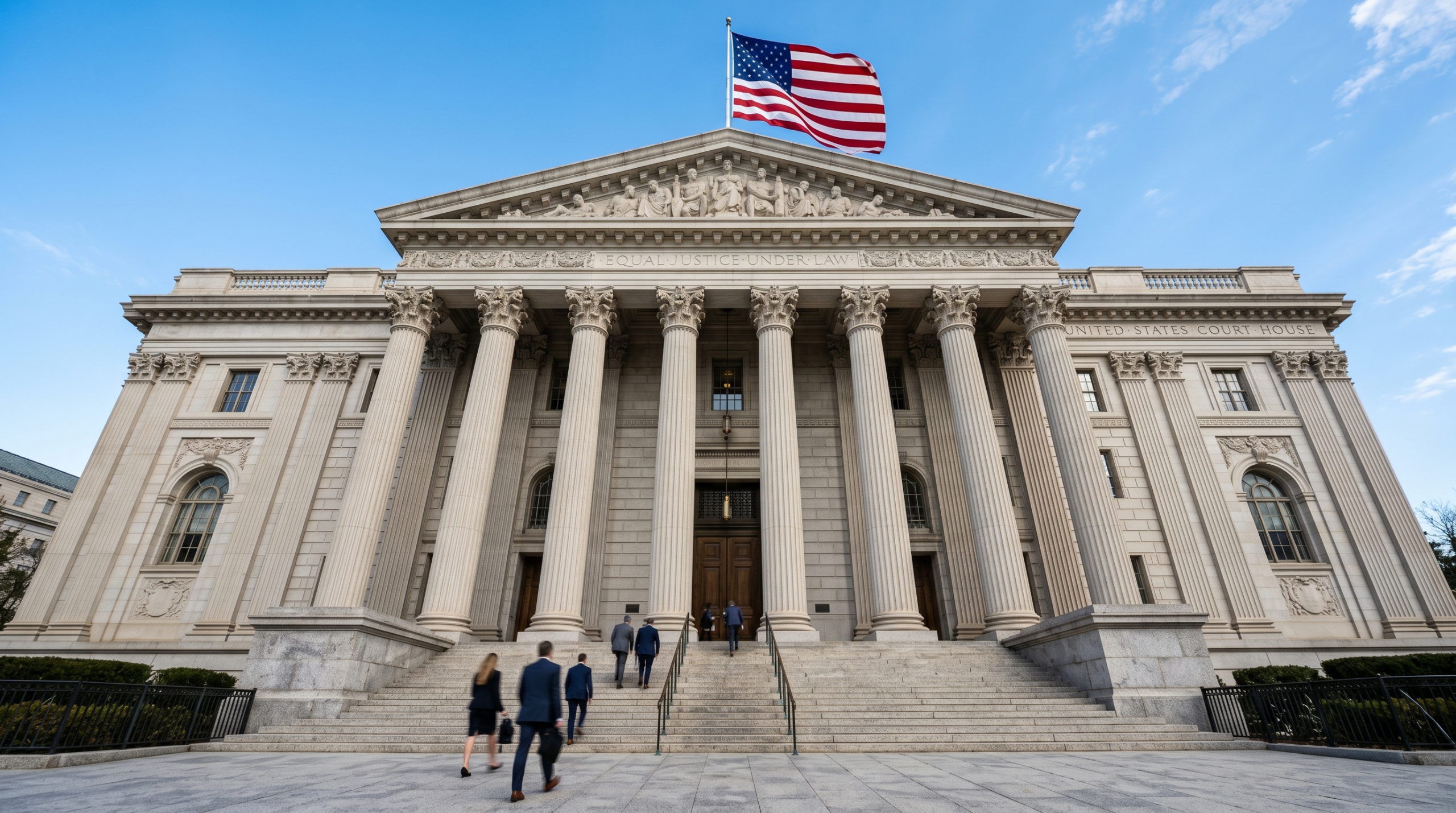
A federal judge in San Jose is considering a landmark case that could determine whether international student journalists can face deportation or visa revocation based solely on their news reporting and political commentary.
The case involves The Stanford Daily newspaper and two unnamed international student writers who are challenging a provision of the Immigration and Nationality Act that allows the secretary of state to deport noncitizens without judicial review if their speech is deemed to compromise foreign policy interests.
During a bench trial on Wednesday, U.S. District Judge Noël Wise heard arguments about whether this statute violates the First Amendment rights of noncitizen journalists and students. The plaintiffs argue that the law enables unconstitutional punishment based purely on protected speech, particularly regarding commentary on Palestine and other political topics.
Conor Fitzpatrick, representing the plaintiffs through the Foundation for Individual Rights and Expression, argued that the statute permits violations of First Amendment rights based solely on the secretary of state’s discretion and viewpoint. He maintained that any instance where someone’s opinion becomes the primary cause for visa revocation or removal proceedings is unconstitutional.
The government’s position, presented by Assistant U.S. Attorney Kelsey Helland, defended the statute as a necessary tool tailored by Congress to address unpredictable national security concerns. Helland argued that Congress deliberately crafted the law broadly to cover potential situations that could not be specified in advance, while maintaining that the secretary of state’s determination provides an appropriate check on enforcement.
The case draws on precedent from American Association of University Professors v. Rubio, where Judge William Young ruled in January that the government had acted unconstitutionally by arresting, detaining, and deporting noncitizen students and faculty who engaged in protected pro-Palestinian speech. However, both parties in the current case advised Judge Wise to use that case’s transcript only for context rather than as binding precedent.
The plaintiffs cited two recent cases to illustrate their concerns. Columbia University graduate student Mahmoud Khalil was detained after participating in protests for Palestinian rights, with his case currently pending in appeals court. Additionally, Tufts University student Rümeysa Öztürk from Turkey had her visa revoked after writing an op-ed critical of her school’s response to the Israel-Hamas conflict.
Judge Wise expressed skepticism about certain government arguments, particularly questioning whether noncitizens should have to wait until prosecution to understand what speech might trigger immigration consequences. She described the case as dealing with “critically important” issues while noting procedural complexities that made the proceedings feel “messy and convoluted.”
The judge had previously issued an order on January 16 denying a motion to dismiss the case, stating that the statute chilled speech and that The Stanford Daily was entitled to relief. This included potentially blocking Secretary of State Marco Rubio and Homeland Security Secretary Markwayne Mullin from revoking visas or initiating deportation proceedings over protected speech.
However, the scope of any potential ruling has been complicated by the 2025 Supreme Court decision in Trump v. CASA, which restricted federal courts’ ability to issue nationwide injunctions that completely halt enforcement of federal policies.
The government maintained that removal decisions must be made on a case-by-case basis, arguing that protected speech rights exist on a sliding scale depending on the speaker’s relationship with the United States. Helland emphasized the importance of allowing the federal government flexibility in immigration policy matters.
Judge Wise concluded the hearing by requesting proposed orders from both sides, acknowledging that certain aspects of the case had left her uncertain. She did not indicate how she might rule on the plaintiffs’ claims but praised both attorneys for their “excellent lawyering” and thorough understanding of the complex legal issues at stake.
Leave a Reply