
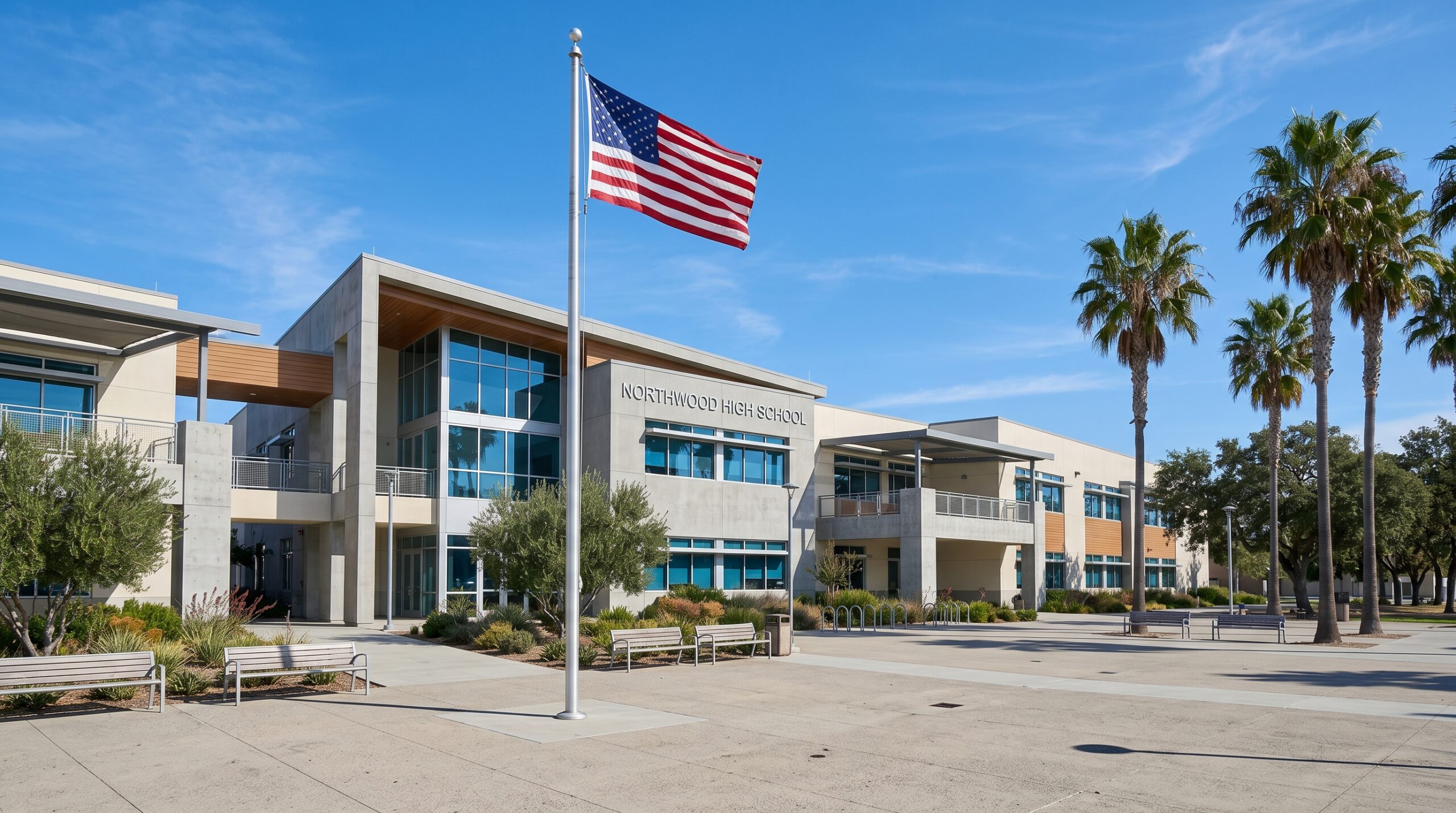
A Palestinian-American teacher who has worked at a California high school for over two decades has received permission from a judge to revise key elements of her discrimination lawsuit against the school district where she teaches.
The case centers around Bassemah Darwish, an English teacher at El Cajon Valley High School, who filed legal action against the Grossmont Union High School District in late 2025. Darwish alleges that school administrators violated her constitutional rights when they prevented a Palestinian cultural song from being played during a one-minute passing period between classes.
The disputed song, “Ana Dami Falasteeni” (“My Blood is Palestinian”) by Mohammed Assaf, was originally selected by Darwish to play in place of the standard school bell. According to court documents, Principal Robert Stirling initially blocked the song from being played around May 9, 2024, citing concerns about potential disruptions and the need to avoid politicizing the brief music program “under the current global circumstances.”
Darwish’s lawsuit claims that Stirling initially reversed his decision after discussing the matter with her, but then changed his position again following intervention from another teacher. The district defended its decision in court filings, arguing that playing the song could spark debate and potentially lead to violence between Palestinian and Jewish students.
El Cajon, located in San Diego County, has a significant Arab and Middle Eastern population, making the cultural dynamics particularly relevant to the case.
San Diego Superior Court Judge Carolyn Caietti initially appeared ready to dismiss several of Darwish’s claims against both the district and Principal Stirling. The judge had found that the original complaint failed to demonstrate that Stirling personally engaged in conduct that would violate constitutional rights, and that the claim against the district lacked sufficient factual support.
However, during Friday morning’s hearing, Darwish’s attorney Hani Habbas successfully argued for the opportunity to correct these deficiencies. Habbas contended that his client was singled out, as she was the only teacher asked to change her song selection despite other potentially controversial songs being permitted during passing periods. He cited as an example the 1981 song “Lunatic Fringe” by Red Rider, which addresses political extremism and references antisemitism and the Holocaust.
The teacher’s complaint also alleges that the district launched a retaliatory investigation into her classroom materials after she raised discrimination concerns. According to the lawsuit, administrators criticized her personal writings about life in Palestine and her experiences with Israeli Defense Forces soldiers.
District spokesperson Collin McGlashen stated that while the district respects the beliefs of its students and staff, it maintains an obligation to ensure campus safety. The district asserts it has discretion to restrict music played over its PA system that contains potentially offensive, polarizing, or disruptive content.
During the hearing, attorney Erin Taylor, representing the school district, objected to Habbas presenting new arguments without prior notice. Despite this procedural concern, Judge Caietti ultimately decided to allow Darwish to amend her claims, citing California appellate court requirements that favor granting opportunities to revise legal pleadings.
The judge granted Darwish permission to amend her claims with the strict condition that no new parties or causes of action be added without a separate motion. The case is scheduled to reconvene in September.
The Grossmont Union High School District is currently facing additional lawsuits involving allegations of discrimination against LGBTQ individuals, indicating broader concerns about the district’s handling of diversity and inclusion issues.
Leave a Reply