
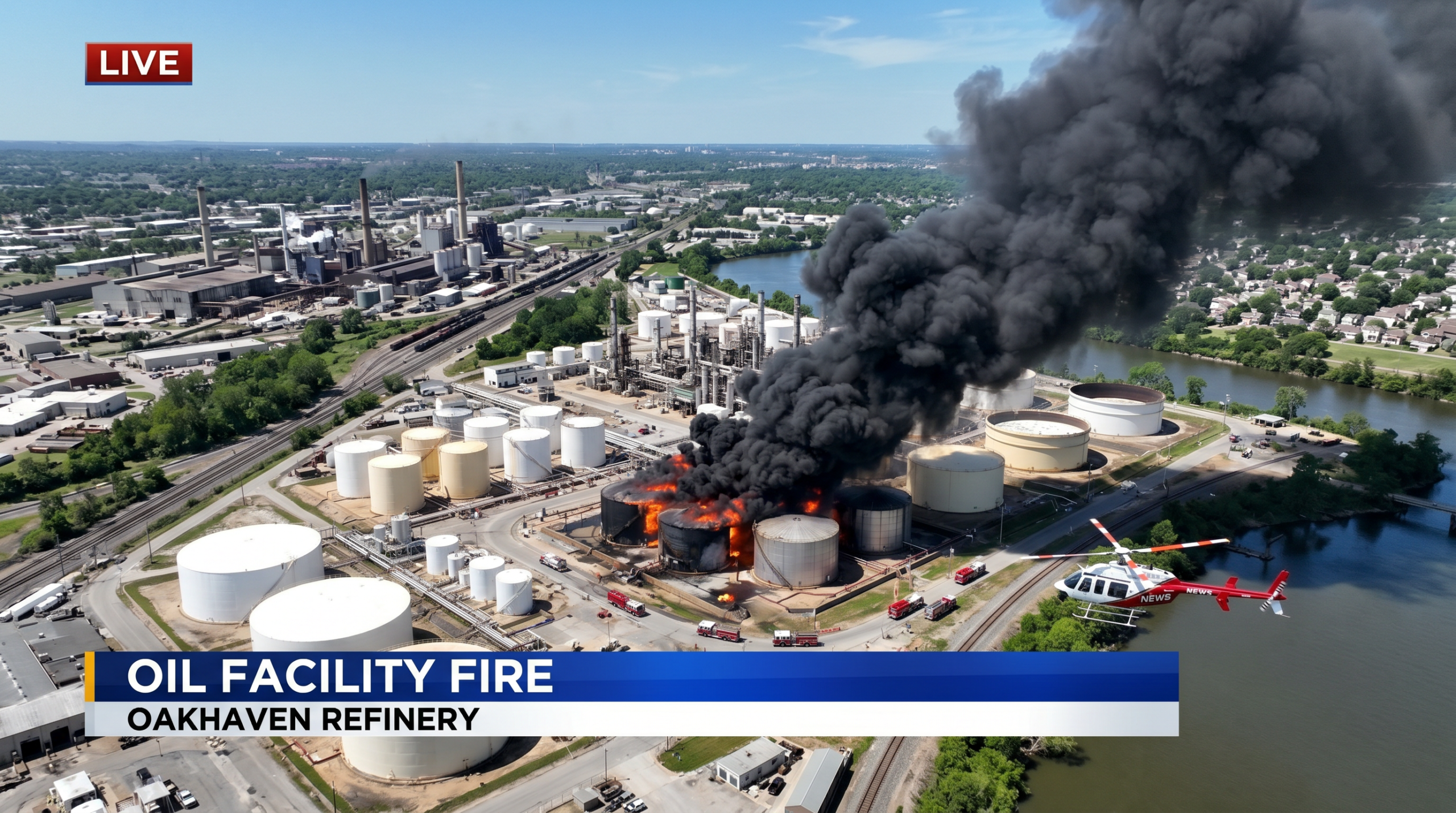
Ukrainian forces conducted overnight drone strikes that ignited fires at multiple Russian oil facilities on Saturday, continuing a campaign against infrastructure that helps fund Moscow’s military operations. The attacks mark the latest escalation in the ongoing conflict that has entered its fourth year.
Local Russian authorities reported that falling drone debris caused a fire at an oil depot and damaged a tanker in the port of Taganrog in the Rostov region. A separate incident occurred in the neighboring Krasnodar region, where officials confirmed a fire at an oil depot in Armavir, also attributed to drone debris.
Ukrainian President Volodymyr Zelenskyy acknowledged the Armavir strike on social media platform X, emphasizing that the facility sits approximately 500 kilometers from Ukraine’s state border. The president characterized the operations as bringing the conflict back to its source, highlighting Ukraine’s evolving military capabilities.
The strikes represent part of Ukraine’s broader strategy targeting Russian oil infrastructure, which has become a near-daily occurrence. These facilities play a crucial role in generating revenue that supports Moscow’s military campaign. Ukraine has significantly developed its domestic drone and missile technology, expanding its ability to conduct mid-range and long-range operations against strategic targets.
Meanwhile, Ukrainian officials are preparing for potential intensified Russian attacks on the capital. The Russian Foreign Ministry indicated earlier this week that systematic strikes on Kyiv would be forthcoming, raising concerns about further damage to civilian infrastructure. Russia has consistently employed long-range ballistic missiles to target Ukraine’s power grid and urban centers throughout the conflict.
Zelenskyy revealed Thursday that he has been persistently requesting additional Patriot air defense systems from the United States. These defensive weapons are considered essential for protecting against Russian ballistic missile attacks that have caused significant damage to Ukrainian cities and critical infrastructure.
The cross-border strikes occurred one day after a concerning incident involving a Russian drone that veered off course during an attack on Ukraine and struck an apartment building in eastern Romania. The mishap injured two people in the NATO member state, intensifying concerns about the potential for the conflict to spread beyond current boundaries. The incident prompted widespread condemnation from European nations.
The targeting of oil infrastructure has emerged as a key element of Ukraine’s military strategy, aimed at disrupting the economic foundations that support Russia’s military operations. These facilities, including refineries, storage depots, and distribution centers, represent vital components of Russia’s energy sector and export capabilities.
As both nations continue to exchange strikes, the conflict shows no signs of de-escalation. Ukraine’s development of indigenous weapons systems has allowed it to project force deeper into Russian territory, while Russia maintains its campaign of missile and drone attacks against Ukrainian population centers and infrastructure. The ongoing exchanges underscore the conflict’s evolution into a war of attrition, with each side seeking to degrade the other’s capacity to sustain military operations.
Leave a Reply