
Virginia’s state government faces a potential shutdown on July 1 as Democratic lawmakers remain deeply divided over whether to continue granting tax exemptions to data center operators, despite their party controlling both the executive and legislative branches.
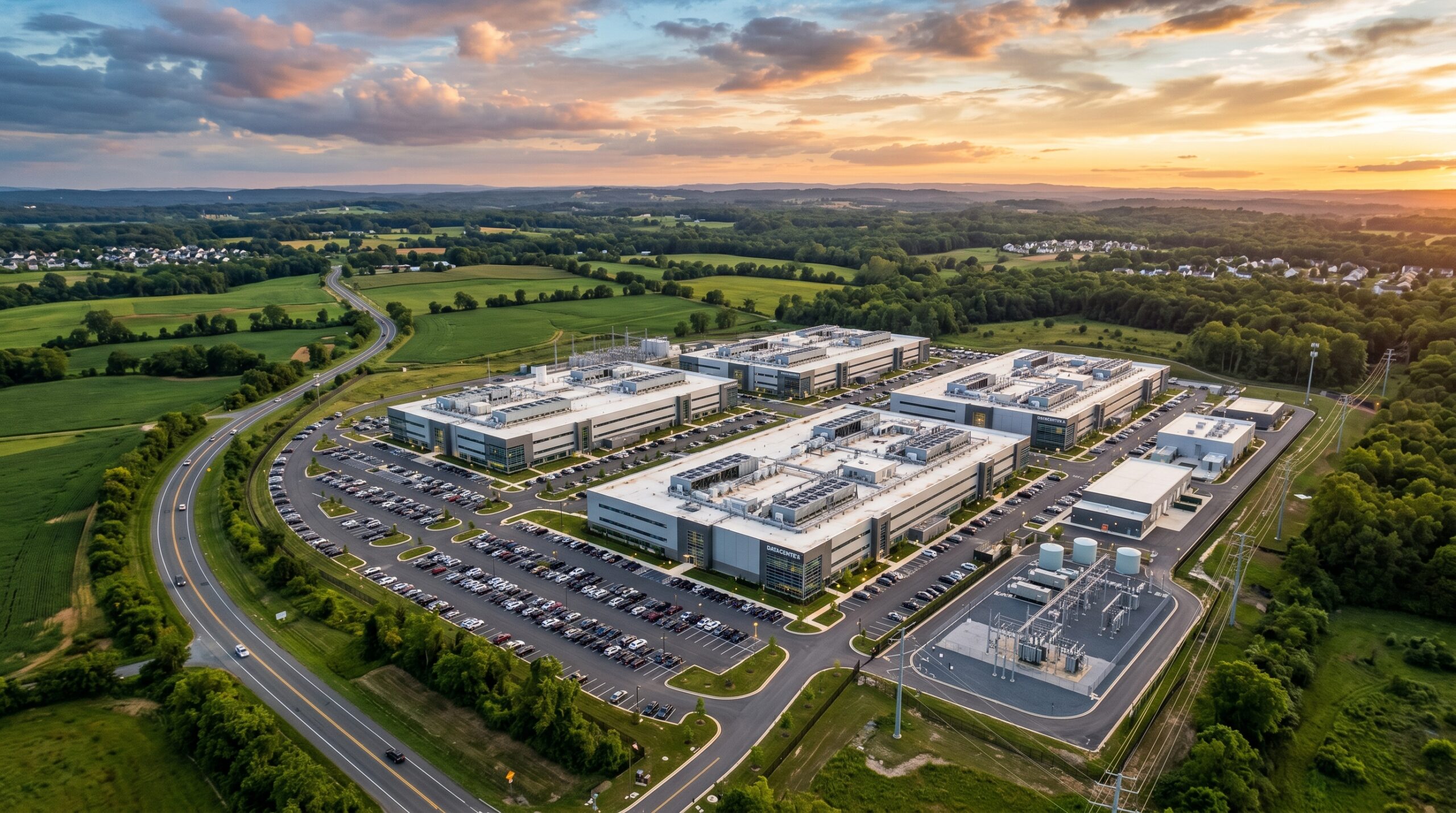
The dispute centers on sales and use tax exemptions that have helped establish Virginia as a global data center hub. The state currently hosts more than 660 active data centers with nearly 600 additional facilities in planning stages. According to a 2024 report from the Joint Legislative Audit and Review Commission, Virginia accounts for 13 percent of reported global data center capacity.
House of Delegates Speaker Don Scott held a press conference Friday urging the state Senate to consider a newly proposed budget that maintains the controversial tax breaks. Scott emphasized the urgency of reaching an agreement, noting that families, teachers, law enforcement officers, firefighters, and state troopers are all waiting for budget approval.
Senate President pro tempore Louise Lucas, who also chairs the Senate Finance and Appropriations Committee, strongly opposes extending the exemption. Lucas argues that data centers should contribute their fair share to state revenues rather than receiving subsidies from taxpayers. The disagreement has led to heated exchanges, with Lucas recently referring to Scott as “Amazon Don” and Governor Abigail Spanberger as the “Data Center Diva.”
Public opinion appears to be shifting against the tax incentives. A Washington Post-Schar School poll of 1,101 Virginia voters found that 56 percent now oppose the incentives, a significant increase from 31 percent in 2023. Additionally, 59 percent of respondents expressed discomfort with the prospect of new data centers being built in their communities.
The financial stakes are substantial. Between fiscal years 2015 and 2024, data centers avoided paying approximately $2.7 billion in sales and use taxes to the state. However, industry supporters point to economic benefits, with a 2024 report estimating that data centers contribute 74,000 jobs, $5.5 billion in labor income, and $9.1 billion annually to Virginia’s gross domestic product. These figures have likely increased with the growth of artificial intelligence technologies.
Campaign finance records show House Finance and Appropriations Committee Chair Luke Torian received $20,000 in 2025 campaign contributions from Micron Technology, $10,000 from the Data Center Coalition, and $5,000 each from Amazon and CloudHQ.
Environmental concerns add another dimension to the debate. Critics argue that data centers strain water supplies and electrical grids, potentially increasing utility costs for residents. The House’s latest budget proposal attempts to address these concerns by establishing a commission to study the industry’s direct and indirect impacts on finances, energy, air quality, water resources, and noise levels. The commission would issue recommendations by year’s end for consideration during the 2027 legislative session.
Governor Spanberger has expressed support for the House proposal, describing it as creating a clear roadmap for evaluating the data center industry’s impact while focusing on fairness to ratepayers and local community needs. She expressed confidence that the General Assembly would deliver a budget she could sign before the deadline.
The tax breaks were originally extended until 2035 through bipartisan legislation passed in 2016. House members worry that canceling these incentives could discourage future business investments in Virginia. The issue transcends party lines, with lawmakers from both parties expressing varying positions on the Senate’s proposal.
The House-proposed budget includes additional provisions, such as a $225 million deposit into a fund designed to mitigate potential federal cuts to programs like Medicaid, while leaving $600 million unappropriated at the close of the biennium.
Lawmakers have scheduled final meetings before the July 1 deadline, with the House convening on June 18 and the Senate on June 22.
Leave a Reply