
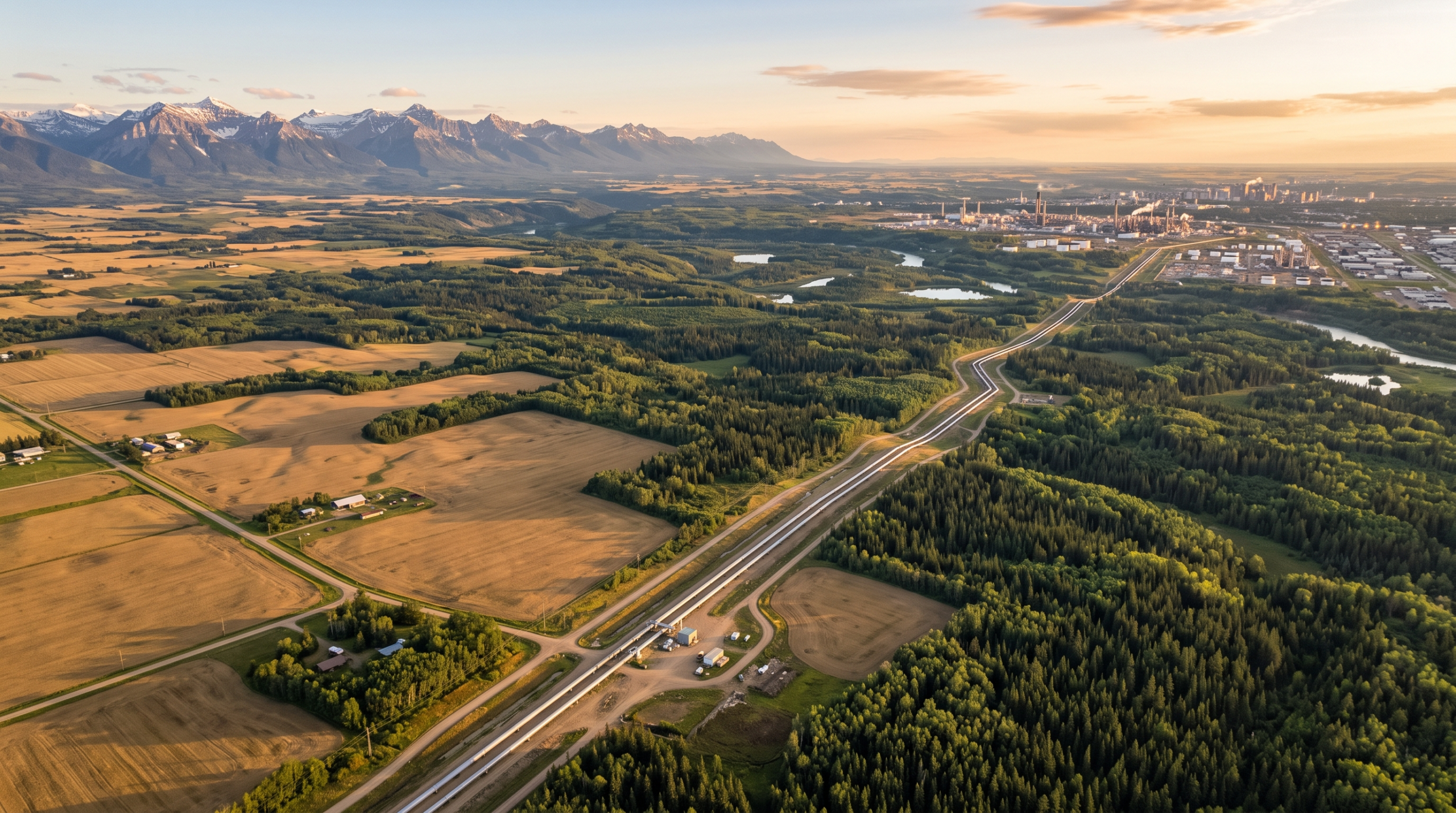
Two of Canada’s largest provinces have announced an ambitious plan to construct a major oil pipeline connecting the country’s western energy reserves to eastern markets, potentially extending to Atlantic export terminals. The proposal marks a significant development in Canada’s efforts to diversify its energy export markets beyond its traditional reliance on the United States.
Alberta Premier Danielle Smith and Ontario Premier Doug Ford unveiled the pipeline proposal on Monday, July 6, 2026, in Calgary. The planned infrastructure would stretch approximately 3,300 kilometers (2,050 miles) from Hardisty, Alberta, to Sarnia, Ontario. Initial capacity would allow for the transportation of 500,000 barrels of oil per day, with the potential to expand to 800,000 barrels.
The project represents a revival of similar efforts that failed nearly a decade ago. The Energy East pipeline, a comparable initiative, was abandoned in 2017 following extensive political, regulatory, and environmental opposition, particularly from Quebec. The new proposal aims to overcome these historical challenges through careful planning and stakeholder engagement.
Smith indicated that the pipeline corridor could eventually extend to Canada’s Atlantic coast, creating opportunities for oil exports to European markets. This expansion would mark a significant shift in Canada’s energy export strategy, as the United States currently purchases the vast majority of Canadian crude oil. Alberta holds one of the world’s largest proven oil reserves, making the province central to Canada’s energy ambitions.
Ford expressed confidence in the project’s financial viability, stating it would represent a sound investment whether funded through public or private sources. A comprehensive feasibility study is planned to assess the technical and economic aspects of the undertaking.
The proposal comes amid broader efforts to expand Canada’s pipeline infrastructure. Smith and Prime Minister Mark Carney recently advanced plans for a separate Pacific coast pipeline aimed at increasing exports to Asian markets. That project involves a partnership between Alberta, the federally owned Trans Mountain Corporation, and Calgary-based Pembina Pipeline, though the extent of private-sector involvement remains undetermined.
Smith has outlined ambitious goals for Alberta’s energy sector, aiming to double oil production to 8 million barrels per day within the next 10 to 15 years. These targets reflect the province’s desire to maximize its natural resource potential and strengthen its position in global energy markets.
However, significant obstacles remain. The project requires substantial financing, multiple regulatory approvals, and extensive consultations with Indigenous communities along the proposed route. Political science professor Daniel Béland from McGill University in Montreal noted that while the project is technically feasible, it represents a massive undertaking still in its early stages, with no final route or cost estimates available.
Energy economist Andrew Leach from the University of Alberta characterized Smith’s production goals as “incredibly ambitious,” pointing to severe inflation experienced during previous rapid production increases. He also raised questions about the economic logic of sending crude to Sarnia without clear pathways for further distribution.
The timing of the announcement coincides with heightened trade tensions and Canada’s strategic push to diversify its export markets. Carney has acknowledged that Canada’s emissions would likely increase in the near term as pipeline infrastructure expands, while emphasizing the importance of accessing European and Asian markets.
Alberta is scheduled to hold a vote this fall on whether to conduct a referendum on provincial independence, adding another layer of complexity to the national energy conversation.
Leave a Reply