
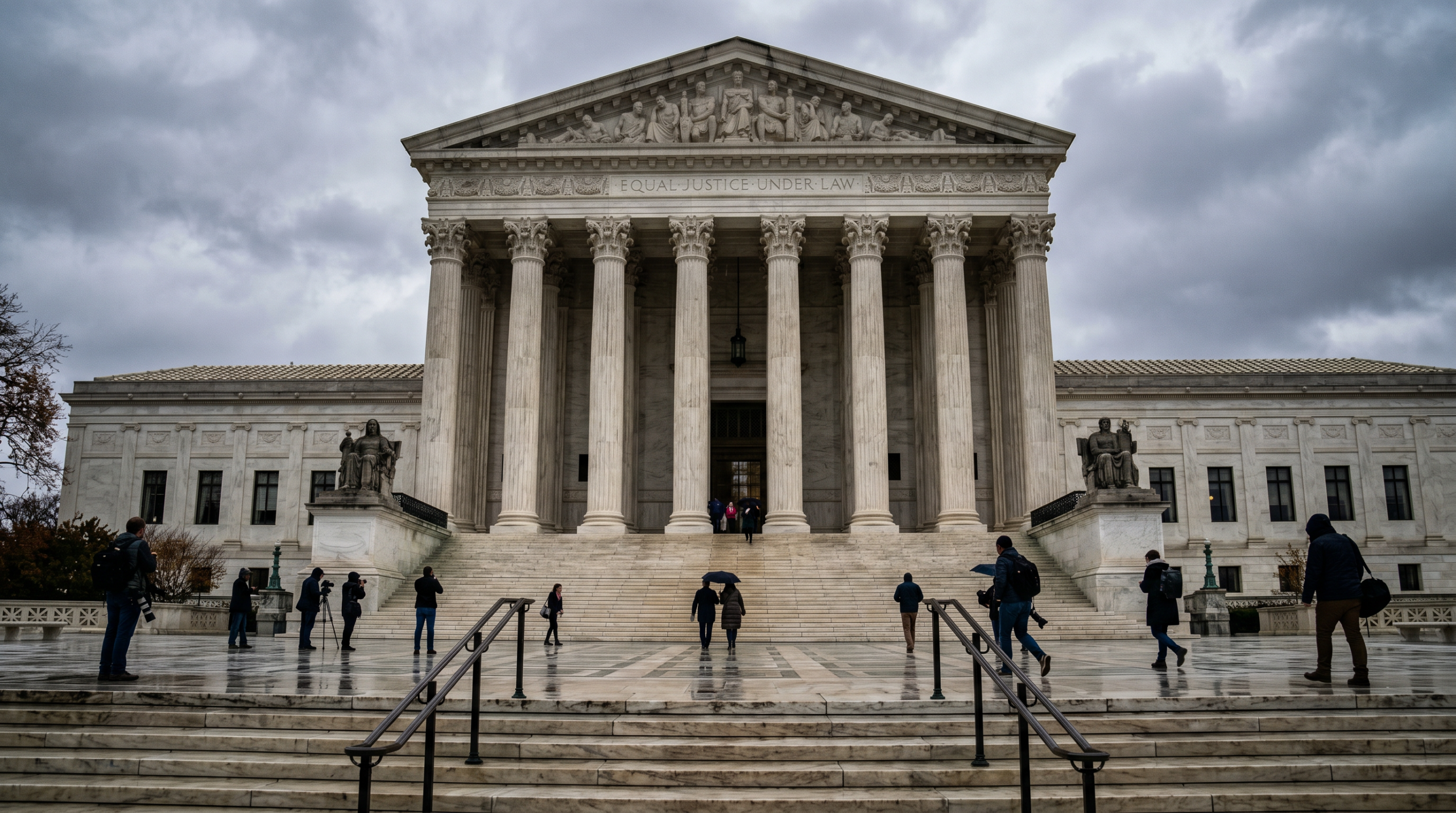
A 59-year-old Tennessee man convicted of a triple murder three decades ago has petitioned the Supreme Court to halt his scheduled execution, arguing that untested DNA evidence could potentially exonerate him.
Tony Carruthers faces execution Thursday morning for the 1994 kidnapping, torture, and burial alive of Delois Anderson, her son Marcellos Anderson, and Frederick Tucker. His legal team maintains that DNA and fingerprint evidence that has never been examined could demonstrate his innocence.
Carruthers was convicted in 1996 after being compelled to represent himself during his trial. A judge had determined that he had implicitly waived his right to appointed counsel. His attorneys characterize his self-representation as catastrophically prejudicial, noting that his co-defendant’s convictions and death sentences were later overturned.
During the trial, Carruthers unknowingly called Alfredo Shaw as a witness. Shaw testified that Carruthers had confessed to him, but it was later revealed that Shaw was a paid informant for Tennessee authorities. In a television interview conducted before the trial, Shaw admitted that police had pressured and compensated him to provide false testimony.
Following his conviction, Carruthers requested DNA testing of a blanket discovered with the victims’ bodies. When his co-defendant, James Montgomery, had the same evidence tested, an expert determined that the DNA on the blanket did not match either defendant. Based on these results, Tennessee prosecutors offered Montgomery a plea agreement, and he was released from custody in 2015.
Tennessee law mandates post-conviction DNA testing when a reasonable probability exists that the defendant would not have been prosecuted or convicted if exculpatory results had been available during the original trial. However, Carruthers’ legal team asserts that state courts have repeatedly denied his requests for DNA testing based on what they describe as arbitrary and irrational interpretations of federal and state regulations.
Maria DeLiberato, senior counsel at the ACLU’s Capital Punishment Project, emphasized the urgency of the situation, stating that the Supreme Court represents the final safeguard against what she termed an irreversible injustice. She argued that the court must uphold principles of truth and fairness, particularly when questions of innocence remain unresolved and forensic testing could provide answers.
Carruthers’ attorneys have drawn parallels to the case of Richard Glossip, an Oklahoma man who was released from prison last week after the Supreme Court ordered a new trial due to prosecutorial misconduct in his decades-old conviction. They note that both men have consistently maintained their innocence throughout their legal proceedings.
The legal filing emphasizes that Carruthers is not requesting to be declared innocent or released from prison. Instead, he seeks a stay of execution to allow the Supreme Court to review his claims and provide fair access to Tennessee’s statutory procedures for testing available DNA evidence. His lawyers indicate that the requested testing would require only two weeks to complete.
If executed, Carruthers would become the first defendant to be executed after representing himself at trial in more than a century.
The case has attracted significant public attention, with more than 130,000 individuals signing a petition addressed to Tennessee Governor Bill Lee requesting that the execution be halted. The governor has declined to intervene.
The Supreme Court’s decision on whether to grant a stay of execution will determine whether the DNA evidence in question will ever be tested, potentially answering crucial questions about Carruthers’ guilt or innocence before the scheduled execution proceeds.
Leave a Reply