
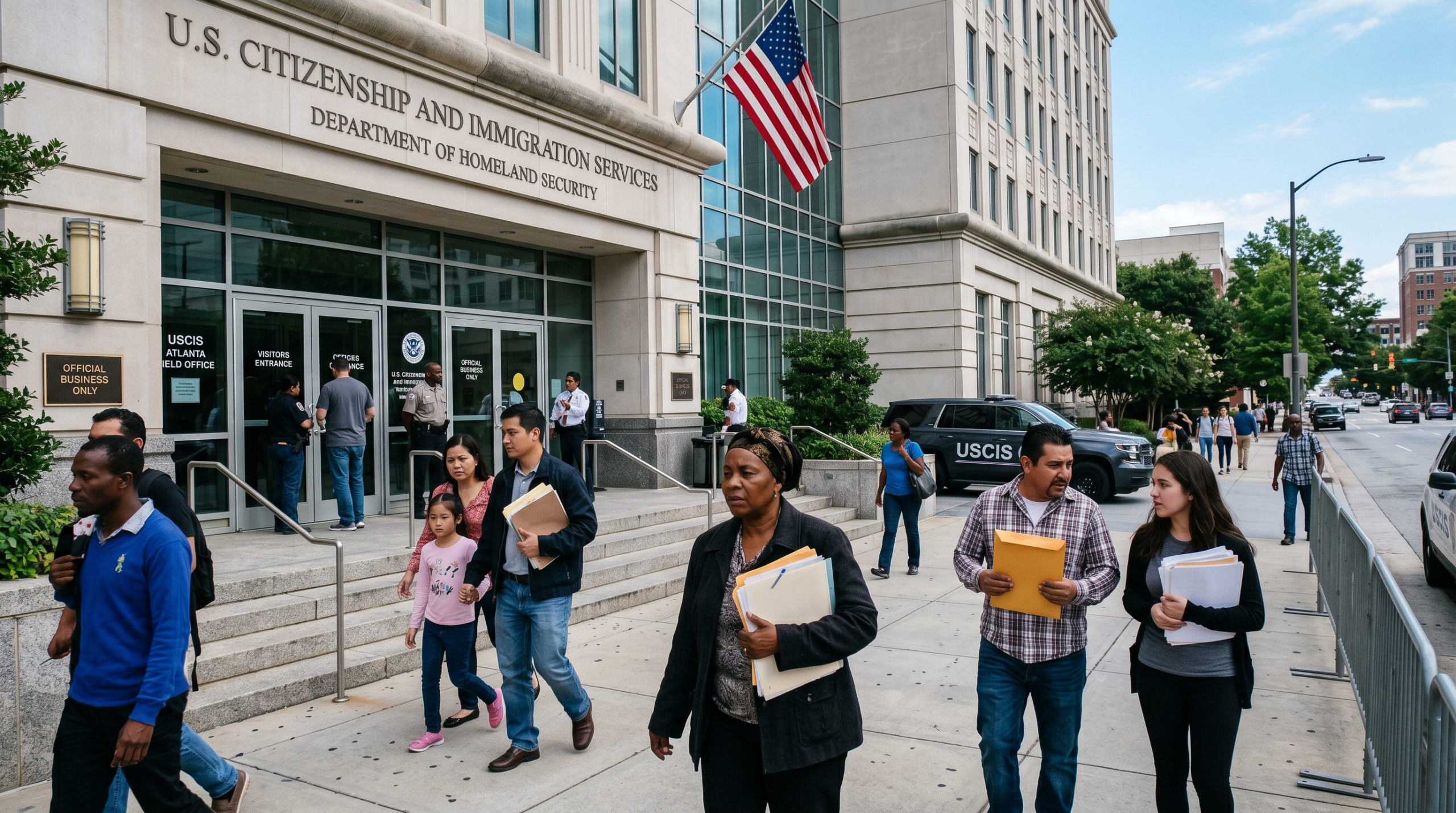
The United States Citizenship and Immigration Services announced Friday that individuals on temporary visas seeking permanent residency must return to their home countries to submit green card applications, a policy shift that could impact more than one million people currently living legally in the United States.
According to agency spokesperson Zach Kahler, the policy requires nonimmigrants, including students, temporary workers, and tourists, to leave the country when their authorized stay expires rather than using their temporary status as a pathway to permanent residency. The agency maintains this approach ensures the immigration system operates as originally intended.
The announcement has raised significant concerns among immigration attorneys and advocacy groups, particularly regarding the approximately 1.2 million legal immigrants currently awaiting green card approval, according to David Bier, director of immigration studies at the Cato Institute. Since 1980, the majority of legal immigrants have obtained permanent residence while already present in the United States on temporary visas.
Immigration attorneys have challenged the agency’s characterization of the policy as merely restating existing law. Eva Golinger, a New York-based immigration attorney, pointed out that adjusting immigration status while in the country represents a legal process established in regulations, not a loophole. She specifically referenced O-1 and H-1B visa categories, which permit dual intent, allowing holders to work on nonimmigrant visas while simultaneously pursuing permanent residence.
The practical implications of this policy could be severe for affected individuals. Those seeking green cards may need to leave behind established lives, including families, employment, and homes, for extended periods ranging from weeks to months, bearing all associated costs themselves. Houston-based human rights attorney Maria Kari expressed concern that individuals who entered legally, built careers, and started families would still be required to exit the country to apply for permanent residency.
Additional complications arise for applicants from countries subject to travel restrictions or visa freezes. Some individuals who leave the United States might face three- or ten-year bars on reentry, creating what Kari described as a potential trap for those attempting to follow the new requirements.
Charles Kuck, an Atlanta immigration attorney and former president of the American Immigration Lawyers Association, anticipates legal challenges to the policy in the coming weeks. He criticized the announcement as appearing to violate multiple provisions of the Immigration and Nationality Act and the Administrative Procedures Act, suggesting it was implemented without proper legal review or coordination with the Department of State.
The policy emerges amid broader changes to the immigration system, with approvals for legal permanent residence declining by fifty percent over the past year. These reductions have primarily affected humanitarian green card categories, including asylum seekers, refugees, Cuban nationals, and crime victims, while employment-based applications have remained relatively stable.
The Cato Institute characterized the announcement as an intentional strategy to increase immigration enforcement arrests by preventing people from maintaining legal status. The organization noted that suspending application processing not only prevents individuals from obtaining permanent residence but may also cause them to lose their existing legal status.
The uncertainty surrounding pending applications remains unresolved, as the agency spokesperson did not clarify whether the new requirements would apply to those with applications already in process. This ambiguity adds another layer of concern for thousands of individuals who have already initiated their permanent residency applications while residing in the United States.
Leave a Reply