
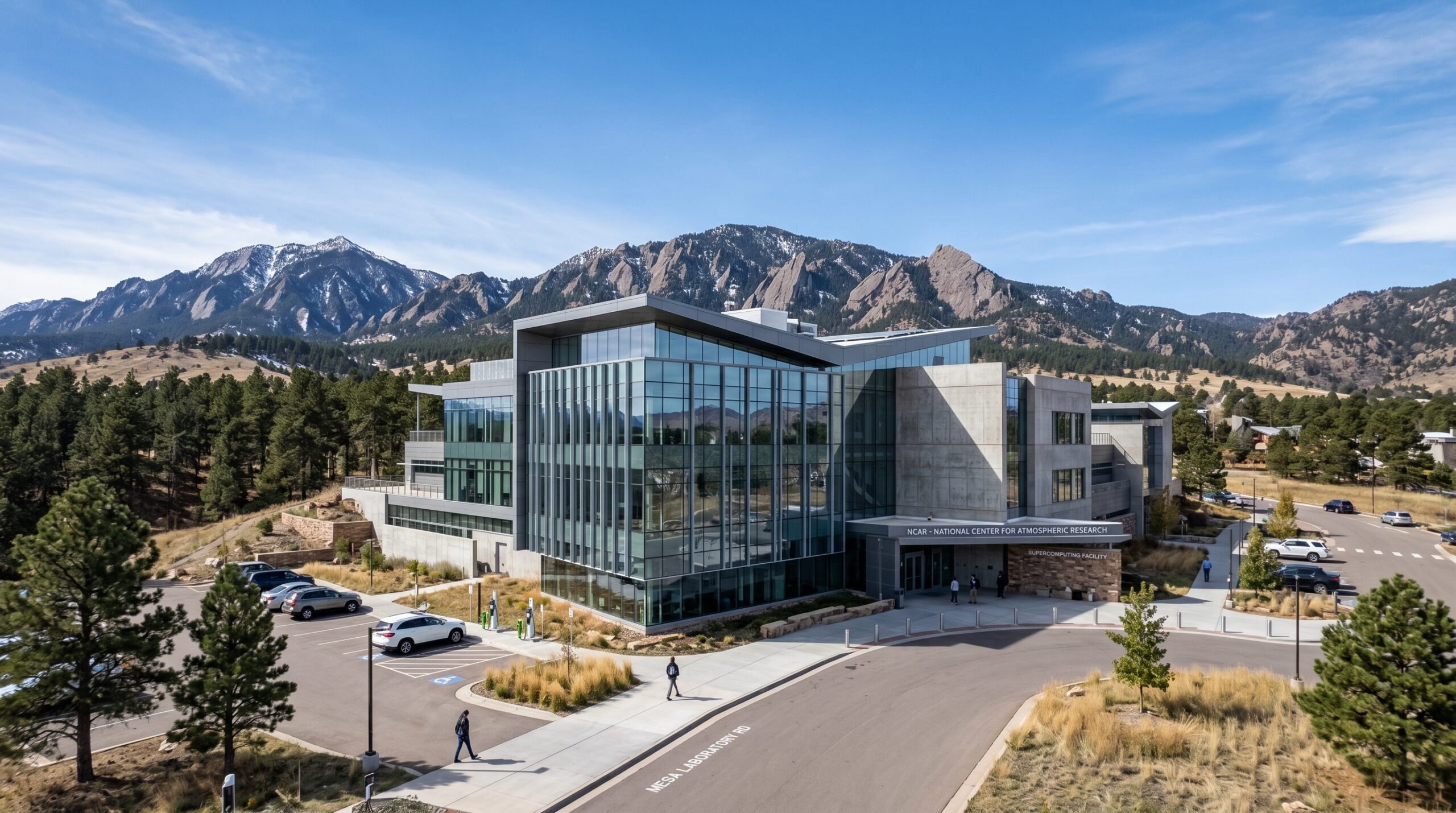
A federal judge has blocked the Trump administration’s attempt to transfer control of a major supercomputing facility from Colorado’s premier climate research institution to the University of Wyoming, ruling that proper procedures were not followed in the decision-making process.
Senior U.S. District Judge R. Brooke Jackson issued the ruling on Monday, preventing the National Science Foundation from proceeding with plans to relocate the NCAR-Wyoming Supercomputing Center away from the University Corporation for Atmospheric Research, which has managed the facility through the National Center for Atmospheric Research in Boulder since 1960.
The dispute centers around critical computing infrastructure that supports 3,752 researchers annually. The facility houses Derecho, a powerful supercomputer, along with Casper artificial intelligence systems and extensive data analysis and storage capabilities. These resources enable 800 scientists and engineers to advance weather modeling, hurricane forecasting, and wildfire predictions for federal agencies including the Department of Defense and NASA.
The University Corporation for Atmospheric Research filed suit against the National Science Foundation on March 16, challenging both funding cuts and the proposed transfer of the supercomputer’s management. Since the government announced its relocation plans, the organization has already lost eight computational information systems lab workers, with concerns mounting about further staff departures.
In his 38-page opinion, Judge Jackson determined that the National Science Foundation had reached a final decision on the transfer, despite government attorneys arguing the plans remained in preliminary stages beyond judicial review. The judge found that without intervention, the research corporation would be forced to divert resources from regular operations to facilitate the transfer while continuing to lose essential personnel.
The ruling highlighted significant procedural failures in the government’s approach. Judge Jackson noted the absence of any documented dissatisfaction with current management, performance deficiencies, or articulated concerns that would justify such a substantial change. He emphasized this gap was particularly notable given the National Science Foundation’s stated commitment to providing world-class infrastructure for weather modeling and space weather research.
The lawsuit suggested the transfer attempt might be connected to broader political tensions between the federal government and Colorado. Internal communications between the National Science Foundation and the Office of Management and Budget indicated the move could be related to the research corporation’s support for diversity, equity and inclusion initiatives, as well as climate change policies.
These tensions extend beyond this single case. Colorado has previously sued the federal government over the proposed relocation of U.S. Space Command from Colorado Springs to Alabama and changes to the SNAP benefits program, alleging both actions constituted illegal retaliation for the state’s positions on elections and the case of former Mesa County elections clerk Tina Peters, who was later pardoned by Governor Jared Polis on May 15.
Eric Barron, president of the University Corporation for Atmospheric Research, emphasized the national importance of maintaining the current arrangement. He stated that the organization’s work supports national security, public safety, and economic prosperity, warning that divesting the research center of its computing facilities would risk disrupting advances in weather and space weather modeling, as well as programs affecting agriculture, water resources, wildfire risk, military support, power grid stability, and aviation safety.
The decision represents a significant setback for the administration’s attempts to restructure federal scientific resources and highlights ongoing disputes over the management and location of critical research infrastructure.
Leave a Reply